


 USB flash drive
| Introduction | USB Flash Drive vs Smart Card |
| As Electronic Floppies | Closing |
| As Extra RAM | Futures |
| As Scratch Drive | Shopping for a USB Flash Drive |
| As DOS Drive | Links |
| Secure flash drives |
aka thumbdrive, disgo, flashdrive, identity token, ikey, jetflash, jumpdrive, pen drive, portable USB (Universal Serial Bus) flash drive, fob, stick, token, UFB, UFD (USB Flash Drive) or USB drive.
The official generic name is now UFD . Asian companies often have a typo and call them UFBs. Most vendors are now calling them flash drives.
thumbdrive is the proprietary name used by Trek. the Singapore-based maker of the first units. A device that looks like a keychain fob that can be used to store and transport information. It is like a tiny solid state disk drive that plugs into your USB port. You can also use them as backup devices. A 32 MB thumbdrive holds as much as 7 DVDs (Digital Video Discs). It is reusable and orders of magnitude faster.
They are used much like sneakernet floppies were in the old days, except they typically hold 700 times as much. Often people use them to transport music files. The iPod is similar to a flash drive except you can’t unload the data to a different machine. Trek makes one with an email client on board, so you can take your email and email software with you on your keychain. The 1 GB version is only Last revised/verified: 2009-03-08
Corel gave me a 2 GB freebie flash drive. It hold the equivalent of 3 CDs.
ReadyBoost is a feature of Vista, W2008, W7-32, W7-64, W8-32, W8-64, W2012, W10-32 and W10-64 to use a flash drive you insert into a USB port to speed up disk access. It caches files.
If you are least bit worried about the data falling into the hands of criminals or strangers or the newsmedia should the flash drive be lost or stolen, make sure you get a password-protected and ideally hardware-encrypted version so that data cannot be retrieved without the pass phrase.
I attempted to use my SanDisk Cruzer as a small fast hard disk for scratch files. To my chagrin, I discovered it was much slower than hard disk. It seems to copy files quickly, but does not handle file record I/O well. So I suggest testing the speed of your flash drive before using it this way.
You can make a flash drive bootable. You can place DOS/FreeDOS (or a small Linux) in the drive and boot to it to run old DOS utilities.
Uses:
One project pending is to set up the Replicator with flash drive-controlled encryption. They could also be used to protect expensive software from being hacked by encrypting parts of it or the data decrypted with keys stored in the flash drive, or by putting part of the software itself in the flash drive.
In China 2 GB flash drives are manufactured for $3.50 each.
Kingston make a line of DataTraveler Vault secure USB flash drives. To your programs, they look like a small hard disk. The user has to enter a password to access it. You can’t use it like a smart card to install a secret private key that no one, not even the owner can look at. It has no CPU (Central Processing Unit). You could put private keys on it, but the owner who knows the password, could tamper with them. The main advantage is if the owner loses the fob, someone picking it up cannot access the files on it. Even with AES hardware encryption models, you cannot use this like a Smart Card.
In theory, there need be no sharp dividing line between a USB Flash drive and Smart Card but in practice they each serve a different niche.
| Differences between USB Flash drives and Smart Cards | ||
|---|---|---|
| Feature | Flash drive | Smart Card |
| Purpose | transporting data | ID and electronic commerce. |
| Capacity | 32 or 64 gigabytes of RAM | Only 300 bytes to 32K bytes. |
| Software | Requires no software other than the driver automatically installed when you insert the flash drive into the USB port. | Requires a driver for the reader and application software to control login, the lock, access to files etc. |
| CPU | has no CPU or a CPU that does nothing but guard the contents of the drive with a PIN and possibly encrypt/decrypt data transparently. | has a CPU that can digitally sign, verify, encrypt and decrypt messages. It may be custom programmed at manufacturing time. |
| private keys | can store the private key of a digital certificate, but it is just ordinary data. The owner of the drive can look at it or change it. | has private keys for digital certificates burned into the hardware in a way that is completely inaccessible or modifiable by the owner. He can digitally sign, verify, encrypt and decrypt messages with those keys however. |
There are two types of closing:
I would think it should be possible to use a Universal ID in the form of a USB flash drive. It would contain a private key that cannot be extracted or duplicated. However, it could encrypt, decrypt and sign text presented to it. You would need a 4 button pin pad on it to prevent its use by someone who stole it. It could sign software and email. It would let you make credit card purchase, access ATM (Automated Teller Machine) machines. You could use to it prove your identity over the Internet. It could act as a passport, drivers licence, medical id… Government legislation could make it legal ID for multi-purposes which would then mean you would not even need a wallet, just the drive on your keyring. The technology to do this is far from rocket science. The impediments are political. I suppose it could start a bit at a time, perhaps first as a frequent visitor perk for hotel chains. It gives you access to VIP (Very Important Person) areas. It lets you pay your bill electronically without a credit card or if your credit cards are stolen. The military use a smart ID card called a CAC (Common Access Card) that is very close to this.
Very large flash drives are called SSDs (Solid State Disks).
When comparing prices, check the shipping. It can be outrageous.
$3.41 |
recommend electronic⇒Kingston Digital 32GB 100 G3 USB 3.0 DataTraveler (DT100G3/32GB) | |||||||||||||||||||||||||||||||||||||||||||||
| asin | B00C5K8E1A | |||||||||||||||||||||||||||||||||||||||||||||
|---|---|---|---|---|---|---|---|---|---|---|---|---|---|---|---|---|---|---|---|---|---|---|---|---|---|---|---|---|---|---|---|---|---|---|---|---|---|---|---|---|---|---|---|---|---|---|
| This is a cheaper plastic version of the metal case Datatraveler Ultimate. Not encrypted. 100 Mb/s read. 10 Mb/s write. specs. | ||||||||||||||||||||||||||||||||||||||||||||||
| ||||||||||||||||||||||||||||||||||||||||||||||
| Greyed out stores probably do not have the item in stock | ||||||||||||||||||||||||||||||||||||||||||||||
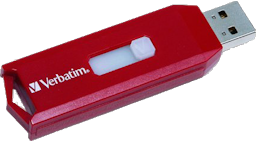 |
recommend electronic⇒Verbatim Store 'n' Go 64 GB USB 2.0 Flash Drive 97005 | |||||||||||||||||||||||||||||||||||||||||||||
| asin | B000BMZOBM | |||||||||||||||||||||||||||||||||||||||||||||
|---|---|---|---|---|---|---|---|---|---|---|---|---|---|---|---|---|---|---|---|---|---|---|---|---|---|---|---|---|---|---|---|---|---|---|---|---|---|---|---|---|---|---|---|---|---|---|
| This drive has password protect and 256 bit AES encryption. It also features a capless design. The contact retreat into the drive when not in use, protected by two claws. Comes in sizes from 2 to 64 GB. There is also a USB 3.0 version. Claims up to 30 MBps and write speeds of up to 12 MBps. Measured 22 MBps and 12 MBps. | ||||||||||||||||||||||||||||||||||||||||||||||
| ||||||||||||||||||||||||||||||||||||||||||||||
| Greyed out stores probably do not have the item in stock | ||||||||||||||||||||||||||||||||||||||||||||||
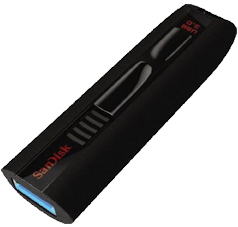 |
recommend electronic⇒SanDisk Extreme 64GB USB 3.0 Flash Drive SDCZ80-064G-G46 | |||||||||||||||||||||||||||||||||||||||||||||
| asin | B00DZPUOUI | |||||||||||||||||||||||||||||||||||||||||||||
|---|---|---|---|---|---|---|---|---|---|---|---|---|---|---|---|---|---|---|---|---|---|---|---|---|---|---|---|---|---|---|---|---|---|---|---|---|---|---|---|---|---|---|---|---|---|---|
| dim | 1.02 × 2.03 × 7.11 cm 0.40 × 0.80 × 2.80 in | |||||||||||||||||||||||||||||||||||||||||||||
| This is one of the fastest USB3 flash drives. It comes in 16, 32 and 64 GB. To get the speed, you must use a USB3 port. Shop around to get the best price per GB. Comes with encryption software, but I don’t think it is onboard the fob. Retractable capless design. This is a good idea. It is so easy to misplace the cap. They claim up to 245 MB/s which has as much meaning as lose up to ten pounds in your first week. However, CrystalDiskMark measured sequential reads at 268MB/s, while sequential writes were 212MB/s. | ||||||||||||||||||||||||||||||||||||||||||||||
| ||||||||||||||||||||||||||||||||||||||||||||||
| Greyed out stores probably do not have the item in stock | ||||||||||||||||||||||||||||||||||||||||||||||
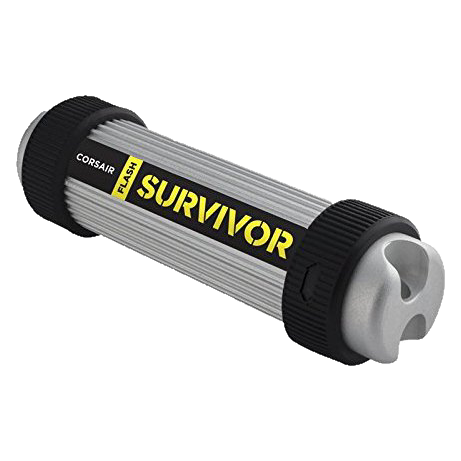 |
recommend electronic⇒Corsair Flash Survivor 32G USB 3.0 | |||||||||||||||||||||||||||||||||||||||||||||
| asin | B00YP5X4WW | |||||||||||||||||||||||||||||||||||||||||||||
|---|---|---|---|---|---|---|---|---|---|---|---|---|---|---|---|---|---|---|---|---|---|---|---|---|---|---|---|---|---|---|---|---|---|---|---|---|---|---|---|---|---|---|---|---|---|---|
| Model CMFSV3B-32G, 32GB, super tough. Max Read (USB 3.0) 80MB/sec Max Write (USB 3.0) 40MB/Sec. Anodised aluminum case. Water seal. | ||||||||||||||||||||||||||||||||||||||||||||||
| ||||||||||||||||||||||||||||||||||||||||||||||
| Greyed out stores probably do not have the item in stock | ||||||||||||||||||||||||||||||||||||||||||||||
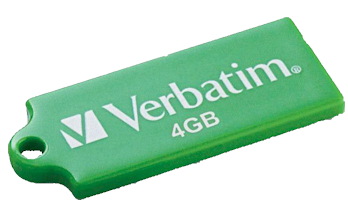 |
recommend electronic⇒Verbatim TUFF 'N' TINY 4 GB USB 2.0 Flash Drive | |||||||||||||||||||||||||||||||||||||||||||||
| asin | B001RCTA8I | |||||||||||||||||||||||||||||||||||||||||||||
|---|---|---|---|---|---|---|---|---|---|---|---|---|---|---|---|---|---|---|---|---|---|---|---|---|---|---|---|---|---|---|---|---|---|---|---|---|---|---|---|---|---|---|---|---|---|---|
| dim | 3.05 × 1.27 cm 1.20 × 0½ in | |||||||||||||||||||||||||||||||||||||||||||||
| Cheap, tiny and tough. USB-2. Designed to fit on a key ring. Comes in sizes from 2 to 32 GB. Different sizes are different colours: orange (2GB), green (4GB), purple (8GB), black (16GB), red (32GB). Has password protect of data, rare in such a cheap drive. It is even smaller than it looks. It will fit on a toonie. Verbatim claims read: 30MBps and write: 10MBps. Specs. These are cheap enough you might use them to distribute data, the way you would have given away floppies or CDs in earlier times. | ||||||||||||||||||||||||||||||||||||||||||||||
| ||||||||||||||||||||||||||||||||||||||||||||||
| Greyed out stores probably do not have the item in stock | ||||||||||||||||||||||||||||||||||||||||||||||
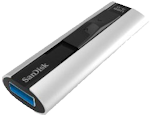 |
recommend electronic⇒SanDisk Extreme PRO USB 3.0 Flash Drive SDCZ88-128G-G46 | |||||||||||||||||||||||||||||||||||||||||||||
| asin | B00HR7FWUC | |||||||||||||||||||||||||||||||||||||||||||||
|---|---|---|---|---|---|---|---|---|---|---|---|---|---|---|---|---|---|---|---|---|---|---|---|---|---|---|---|---|---|---|---|---|---|---|---|---|---|---|---|---|---|---|---|---|---|---|
| dim | 1.10 × 2.10 × 7.10 cm 0.43 × 0.83 × 2.80 in | |||||||||||||||||||||||||||||||||||||||||||||
| As of 2014-06-20 this was SanDisk’s top of the line model. It writes faster than any other drive I know of. It comes only in 128GB. It has a durable aluminum case and a lifetime warranty. It comes with AES encryption software, but I don’t think it has built-in hardware in the fob, making it less secure. CrystalMark rates it 260.7MB/s for sequential reads and 245.1MB/s writes. It is drastically slower for random access, but normally you use these devices only for copying (reading and writing files sequentially). Specs. This thing is so big and so fast you could think of it as a portable SSD drive. | ||||||||||||||||||||||||||||||||||||||||||||||
| ||||||||||||||||||||||||||||||||||||||||||||||
| Greyed out stores probably do not have the item in stock | ||||||||||||||||||||||||||||||||||||||||||||||
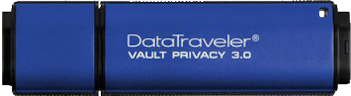 |
recommend electronic⇒Kingston model DTVP30/32GB flash drive, 32 GB. Data Traveler, AES Encrypted | |||||||||||||||||||||||||||||||||||||||||||||
| asin | B00G31OP56 | |||||||||||||||||||||||||||||||||||||||||||||
|---|---|---|---|---|---|---|---|---|---|---|---|---|---|---|---|---|---|---|---|---|---|---|---|---|---|---|---|---|---|---|---|---|---|---|---|---|---|---|---|---|---|---|---|---|---|---|
| Kingston model DTVP30/32GB flash drive, 32 GB. Data Traveler, AES Encrypted Vault Privacy 256Bit, USB 3 You can’t use the CPU other than to encrypt/decrypt the data stored in the drive. Read up to 24 MBps. Write up to 10 MBps. Amazon sells this under many different ASINs for many different prices. | ||||||||||||||||||||||||||||||||||||||||||||||
| ||||||||||||||||||||||||||||||||||||||||||||||
| Greyed out stores probably do not have the item in stock | ||||||||||||||||||||||||||||||||||||||||||||||
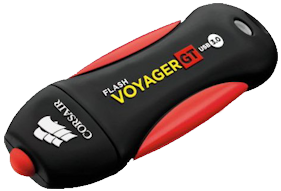 |
recommend electronic⇒Corsair Flash Voyager 16GB USB 3.0 | |||||||||||||||||||||||||||||||||||||||||||||
| asin | B008MCZHVU | |||||||||||||||||||||||||||||||||||||||||||||
|---|---|---|---|---|---|---|---|---|---|---|---|---|---|---|---|---|---|---|---|---|---|---|---|---|---|---|---|---|---|---|---|---|---|---|---|---|---|---|---|---|---|---|---|---|---|---|
| This product is not in stock at any of the Amazon stores. CMFVYGT3A-16GB. This drive is cheaper and faster than the equivalent USB 2.0 version. There a slightly cheaper, much slower blue version of this drive. 440 MB/s read, 5 MB/s write. It comes in 16, 32, 64 and 128 GB verisons. | ||||||||||||||||||||||||||||||||||||||||||||||
| ||||||||||||||||||||||||||||||||||||||||||||||
| Greyed out stores probably do not have the item in stock | ||||||||||||||||||||||||||||||||||||||||||||||
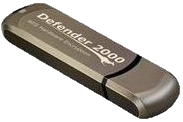 |
recommend electronic⇒Kanguru Defender 2000 8 GB USB flash drive | |||||||||||||||||||||||||||||||||||||||||||||
| asin | B008BYYZOY | |||||||||||||||||||||||||||||||||||||||||||||
|---|---|---|---|---|---|---|---|---|---|---|---|---|---|---|---|---|---|---|---|---|---|---|---|---|---|---|---|---|---|---|---|---|---|---|---|---|---|---|---|---|---|---|---|---|---|---|
| Note spelling: Kanguru not Kangaroo. 8GB. This is the deluxe version of the Kanguru Defender Basic. It works on Windows, Mac OS and Linux. It comes in a strong alloy case to make it tamper resistant. It has management features. Like the Basic, it has AES encryption in hardware. It comes in sizes from 8 GB to 128 GB. If you use it for backup, you can take it with you wherever you go. You can restore anything from your backup anywhere. If your computer or backups are stolen, you will still have the fob on your keychain. Because it is password protected, if you lose the fob, the finder cannot read it. It weighs only 11 grams. Specs. The drive is not particularly fast, but consider it is doing so some pretty heavy encryption/encryption on the fly. It is not nearly as fast as a hard disk. Read 30 MB/s, Write: 20 MB/s. manual. To see the advantages of the more expensive models, see the comparison matrix. When you unlock the secure partition, it remains unlocked to all applications on the system unless you lock it back. There is no way to unlock it to only one application. This probably applies to encrypted, password-protected USB flash drives generally. It appears as two drives. One contains the autoplay logon application and one is the secure datadrive which looks like a removable drive, with no media, when you have not logged on. It is all menu driven and duck simple. If you buy direct from the manufacturer, you will have a choice capacities and custom engravings. They do not take PayPal. They ship only to the USA. Despite the name, they are based in Massachusetts, not Australia. When your drive arrives, go to the Kanguru site to download and install the latest firmware upgrade. | ||||||||||||||||||||||||||||||||||||||||||||||
| ||||||||||||||||||||||||||||||||||||||||||||||
| Greyed out stores probably do not have the item in stock | ||||||||||||||||||||||||||||||||||||||||||||||
 |
This page is posted |
http://mindprod.com/bgloss/usbflashdrive.html |
Optional Replicator mirror
|
J:\mindprod\bgloss\usbflashdrive.html | |
 |
Please read the feedback from other visitors,
or send your own feedback about the site. Contact Roedy. Please feel free to link to this page without explicit permission. | |
| Canadian
Mind
Products
IP:[65.110.21.43] Your face IP:[216.73.217.43] |
| |
| Feedback |
You are visitor number | |


