


| Protocols Supported | Unlimited Strength Encrytion |
| Implementations | Books |
| Discovering Installed Providers | Learning More |
| Where to Find the Classes | Links |
Americans had a silly law that code written in the USA that does strong encryption cannot be exported outside the USA and Canada, even though the algorithms are published. This has had the effect of stimulating European and Australians to provide such software which is immune to the restriction, taking business away from American companies. It was repealed circa 2000, but various other countries have restrictions on importing full strength encryption. The JCE that comes with the JDK (Java Development Kit) is crippled. To get full strength encryption, you need to download and install the full strength extension.
You can avoid this hassle. BouncyCastle.org is located in Australia.
The ABA (Australian Business Access) provided a clean room implementation of JCE 1.2, including a cryptographic service provider, for international use. ABA seems to have disappeared.
BouncyCastle, another Australian group, has a free cleanroom implementation of JCE 1.2.1.
An Austrian university foundation with the unlikely name of SIC-IAIK-TUG (Stiftung Secure Information and Communication Technologies Institute for Applied Information Processing and Communications) has produced a large commercial JCE implementation that includes SSL (Secure Sockets Layer) and AES (Advanced Encryption Standard).
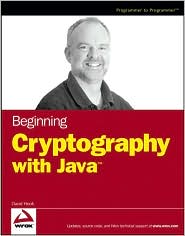 |
recommend book⇒Beginning Cryptography with Java | |||||||||||||||||||||||||||||||||||||||||||||||||||||||
| by | David Hook | 978-0-7645-9633-9 | paperback | |||||||||||||||||||||||||||||||||||||||||||||||||||||
|---|---|---|---|---|---|---|---|---|---|---|---|---|---|---|---|---|---|---|---|---|---|---|---|---|---|---|---|---|---|---|---|---|---|---|---|---|---|---|---|---|---|---|---|---|---|---|---|---|---|---|---|---|---|---|---|---|
| birth | 1962-04-19 age:56 | 978-0-471-75701-6 | eBook | |||||||||||||||||||||||||||||||||||||||||||||||||||||
| publisher | Wrox | |||||||||||||||||||||||||||||||||||||||||||||||||||||||
| published | 2005-08-19 | |||||||||||||||||||||||||||||||||||||||||||||||||||||||
| Covers JCA, symmetric and asymmetric key encryption in Java, message authentication codes, padding, ASN.1, certificate revocation, CMS, SSL and S/MIME and the BouncyCastle provider. Unlike many books on the subject, this one is rich with sample code. | ||||||||||||||||||||||||||||||||||||||||||||||||||||||||
| ||||||||||||||||||||||||||||||||||||||||||||||||||||||||
| Greyed out stores probably do not have the item in stock. Try looking for it with a bookfinder. | ||||||||||||||||||||||||||||||||||||||||||||||||||||||||
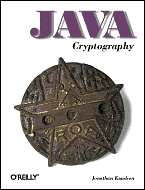 |
recommend book⇒Java Cryptography | |||
| by | Jonathan Knudsen | 978-1-56592-402-4 | paperback | |
|---|---|---|---|---|
| publisher | O’Reilly  |
978-1-4493-9061-7 | eBook | |
| published | 1998-05-01 | B0043M4ZC0 | kindle | |
| JCE has evolved considerably since this book was published. It teaches you how to write secure programs using Java’s cryptographic tools. It includes the java.security package and the Java Cryptography Extensions (JCE). It discusses authentication, key management, public and private key encryption. How to implement ciphers, keys and other data-obscuring techniques in Java. Includes source for a provider of the ElGamal algorithm. | ||||
| Greyed out stores probably do not have the item in stock. Try looking for it with a bookfinder. | ||||
 |
This page is posted |
http://mindprod.com/jgloss/jce.html |
Optional Replicator mirror
|
J:\mindprod\jgloss\jce.html | |
 |
Please read the feedback from other visitors,
or send your own feedback about the site. Contact Roedy. Please feel free to link to this page without explicit permission. | |
| Canadian
Mind
Products
IP:[65.110.21.43] Your face IP:[18.225.57.49] |
| |
| Feedback |
You are visitor number | |


