


The world’s got a pretty simple choice here. It’s between George W. Bush and grandchildren.
~ Bob Brown (1944-12-27 age:73), Australian Senator, calling for a U.S. oil boycott because of George Bush’s refusal to sign the Kyoto climate change treaty.
The Kyoto Accord is an international treaty whereby countries agree to reduce the amount of greenhouse gases they emit if their neighbours do likewise. It is a very complex agreement that allows trading pollution credits. If it is cheaper to reduce emissions in country A, then country B can buy the pollution credits and have them count toward its own quota of reductions. Happily, the global atmosphere does not care where the greenhouse gas reductions come from. There was a second round in Copenhagen and third in Durban. The next will be in Doha in Qatar. Unfortunately, there has been almost no progress. Because there has been so little progress, most of this essay, written at the time of the Kyoto conference, is still current.
The current Kyoto round calls for a greenhouse gas emission reduction of 6% in Canada and 5% in the USA.
Canada is the third worst polluter on the planet (after Australia and the USA). They have done absolutely nothing to reduce greenhouse gases and the Conservative government elected 2008-10-14 has promised to do nothing in their term in office. If this were no bad enough, Canada tried to get offsetting Kyoto credits for any forests they did not level, as if destroying all forests were the expected norm. They also tried to excuse themselves on the grounds Canada has a small population. China could pull the same silly argument if they considered each province of China separately.
Kyoto was one of the early and better known conferences. There is one each year.
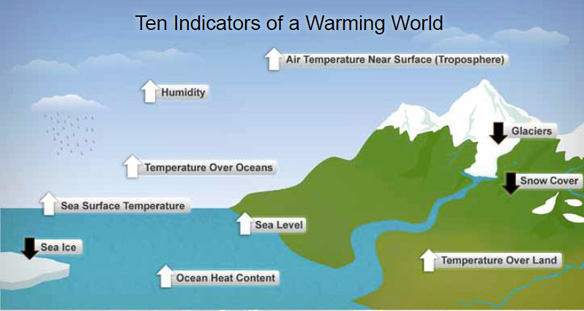
After millions of years of remaining constant, greenhouse gas levels, particularly CO₂, started to climb sharply at the beginning of the industrial revolution. They are now almost certainly higher than they have been in 20 million years. This is not a natural fluctuation. It is a side effect of us humans diligently burning the oil, coal and forests. These greenhouse gases trap heat in the atmosphere, much like a giant greenhouse. The heating is called global warming.
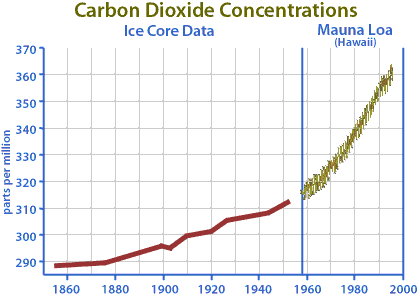
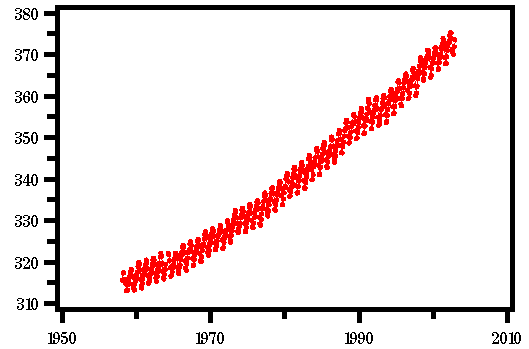
Measured in ppmv (parts per million by volume)
Global warming has already reduced the depth of the winter polar ice cap since the 1970s by 40%. Polar bears will become extinct if the ice retreat continues. 90% of all glaciers on the planet have retreated significantly in the last 50 years. As the white reflective snow melts, it leaves behind the darker earth which is even more efficient at absorbing solar energy. This causes an acceleration of the heating effect.
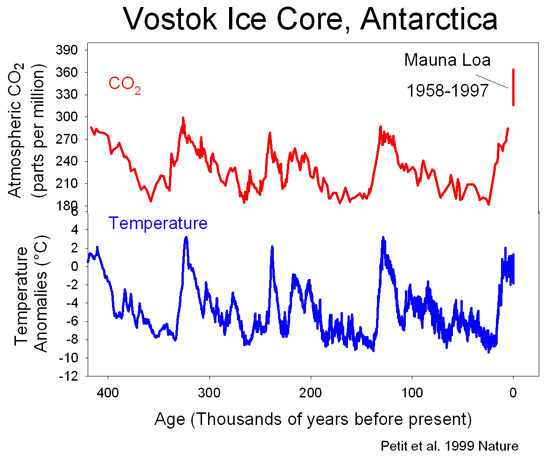
Notice how CO₂ and temperature correlate. This correlation was discovered back in the 1800s.
So what? Who likes snow and ice? Consider:
Computer models show we can expect a five degree centigrade (nine degrees Fahrenheit) increase in average temperature within 100 years. This is far from the worst case scenario. (The worst case is a runaway greenhouse effect.) Five degrees Celsius does not sound like much, however, consider that the earth is a mere five degrees warmer on average than it was during the last ice age. Another way of looking at it is that a five degree Celsius warming represents a change equivalent to moving from San Francisco (average temp 12°C (54°F) ) to Los Angeles (average temp 18°C (64°F), or from Los Angeles to San Antonio Texas (average temperature 22°C (72°F) ).
Well so what? Wouldn’t it be nice to live in a warmer climate? There are at least four drawbacks:
Most people don’t seem to understand how drastic the recent changes in temperature are. They think of them as just part of the background warming that ended the ice ages. This graph should explain it:
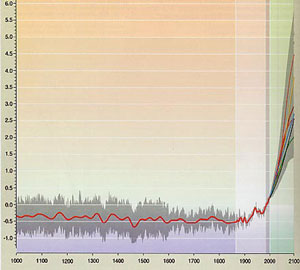
Earth’s average temperature from 1000 AD to 2100 AD.
The red line shows the average temperature of the earth over the last 1000 years. The grey vertical line represents the year 2000. You notice the red line is pretty flat then suddenly starts to take off matching the curve of greenhouse gas production that came along with global industrialisation. The last part is an extrapolation based on computer models. There are several lines, outcomes dependent on how lackadaisical we are about global warming.
You might wonder how scientists can possibly know the average temperature going back 1000 years. There are many sources of information that can be used to cross check each other including ice cores, chemical analysis of carbon isotopes, tree rings of 1000 year old trees, plant remains in silt layered deposits and of course civil records.
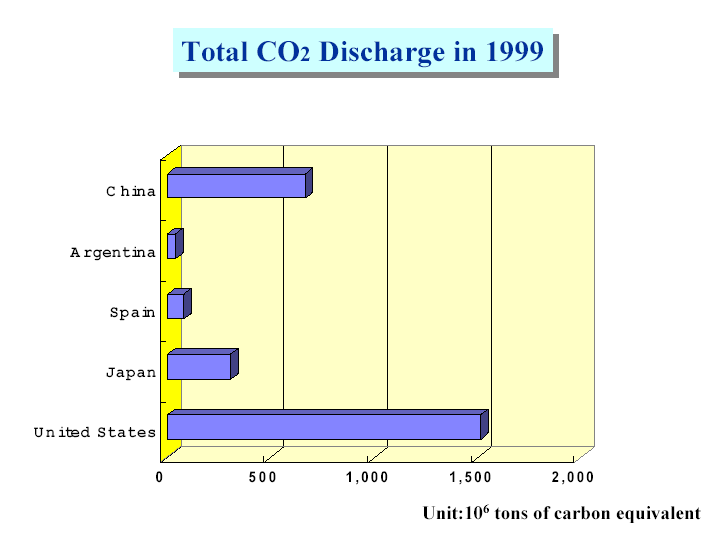
In 1999 the United States pumped out more CO₂ than the entire rest of the world combined. By 2007 China moved to #1 slot. We as a species pump as much CO₂ into the air each year as you would get from burning down every tree in Canada each year.
Each person on earth breathes out about 850 grams (1.87 lbs) of CO₂ each day.
Transportation accounts for 40% of the problem. The number of cars is growing world wide ten times faster than the population. Every US gallon of gasoline burned produces 9 kg (19.84 lbs) of CO₂. It would take a large tree about a year to absorb this much CO₂. One reader was skeptical the CO₂ produced could weigh more than the gasoline. Recall your high school chemistry. When gasoline (an octane/hexane mix) burns each carbon atom (atomic weight 12) joins with an oxygen molecule containing two oxygen atoms (atomic weight 16) from the air. The oxygen forms 73% of the weight of the resulting CO₂.
We’re about a degree Fahrenheit in the planet warmer than we were a century ago, but the vast majority of those who know something about it believe that at least half of that in the last 30-40 years is due to our using the atmosphere as an un-priced sewer to dump our tailpipe and our smokestack wastes. And every time we try to talk about getting a tax on those emissions, they tell us it’s an interference in the free market, as if, somehow, we should get our garbage collected for free.
~ Dr. Stephen Schneider (1945 age:72), professor of biological science at Stanford University, editor in chief of the Encyclopedia of Climate and Weather
Klein imagines that the Kyoto treaty will be costly to the oil interests in his province. He reasons, if we reduce emissions, we necessarily will necessarily consume less oil, therefore Alberta will sell less oil, therefore Alberta will make less money. Therefore, Kyoto must but stopped, the planet be damned.
I think Klein has it backwards. The way to reduce emissions is by using more efficient cars and machines that use less oil. This means the oil reserves will last longer. This means the oil producers can continue to collect money for a longer time. The oil monopolies will be able to raise oil prices, knowing that their customers now have more money in their pockets from using more efficient vehicles. Yet it won’t cost any more to produce the oil than now. Overall then, the oil producer would get more money for the same amount of oil in his reserves.
Though the vast majority of the world’s scientists are on board for cleaning up the atmosphere, a few can be bribed to lie or mislead the public. TV, in an attempt at balance, invites one anti-Kyoto expert for every one pro, even though scientists are about 1000 to 1 in favour of Kyoto.
Industry similarly screamed at the acid rain restrictions. Yet it turned out the acid captured in the smokestacks more than paid for the equipment to collect it. This same pattern has repeated itself over and over. Capturing and reusing a pollutant, or avoiding creating it in the first place always turns out to be unexpectedly profitable.
We don’t let children play with life support systems in hospitals, yet we allow alcoholic diffuses to meddle with the life support systems of spaceship earth. The politicians don’t understand the science needed to deal with global warming.
Others pooh-poohing global warming, quote president Bush, the man famous for lying about Iraq, 2001-09-11, his military career and just about everything else.
Others quote Bjørn Lomborg, The Skeptical Environmentalist: Measuring the Real State of the World, who does not even have a BSc. See what scientists in the field have to say about this quack.
Sometimes I wonder whether the world is being run by smart people who are putting us on or by imbeciles who really mean it.
~ Mark Twain (1835-11-30 1910-04-21 age:74)
The oil industry has gone so far as to found it own support group to attempt to refute such charges and extraordinarily well-funded lobby called the GCC Global Climate Coalition, which initially included all the biggest oil, coal and auto companies. They spent $60 million on disinformation to oppose attempts to reduce greenhouse gas emissions. They, of course, were all strong Bush supporters. Bush lied to the people during his campaign that he was going to reduce CO₂ emissions, then pushed through bills to increase them, such as the SUV (Sport Utility Vehicle) tax subsidy. Many of their members have since seen the light and have abandoned the coalition. These include BP, Shell, Ford, DaimlerChrysler, Texaco, Southern Company and General Motors. There’s no point in fighting reality. You will make more money working with it. Even Bush and FOX’s Bill O’Reilly now admit the threat of global warming is real.
Global warming is here. All these idiots that run around and say it isn’t here. That’s ridiculous.
~ Bill O’Reilly (1949-09-10 age:68)
I have said consistently that global warming is a serious problem.
~ George W. Bush (1946-07-06 age:71), 2006-06-26
California will not wait for our federal government to take strong action on global warming. International partnerships are needed in the fight against global warming.
~ Arnold Schwarzenegger (1947-07-30 age:70)
The environmental and economic consequences of climate change and our dependency on fossil fuels compel both California and the United Kingdom to commit to urgent action to reduce greenhouse gas emissions and promote low-carbon technologies.
~ Tony Blair (1953-05-06 age:65)
Many people have the impression that there is significant scientific disagreement about global climate change. It’s time to lay that misapprehension to rest. There is a scientific consensus on the fact that Earth’s climate is heating up and human activities are part of the reason. We need to stop repeating nonsense about the uncertainty of global warming and start talking seriously about the right approach to address it.
~ Naomi Oreskes , 2004-12-26
If you compressed the atmosphere to a liquid, it would be about 1/500 the size of the oceans. It is not nearly as big as people assume.
~ Tim Flannery (1956-01-28 age:62), 2006-09-09
According to an article in Mother Jones, 2005-05/06 by Chris Mooney, from 2000 to 2003, Exxon funneled more than $8 million into a network of think tanks, quasi-journalistic media outlets and civic and religious groups, to great effect. Peer-reviewed scientific journals contain virtually nothing that challenges the consensus on anthropogenic global warming.
Those who have a financial investment is playing ostrich, carefully avoid reading any of the thousands of books written by reputable scientists.
As you might guess, I think those claiming doubt about climate change are a bunch of paid shills without conscience. But let us give them the benefit of the doubt. If there is doubt about climate change, what is the prudent thing to do?
Buckminster Fuller explained that our planet can be considered a spaceship, with a life support system — the atmosphere. If you shank the earth to the size of a basketball, the atmosphere would be about as thick as a layer of saran wrap. In other words, it is fragile.
One does not jerk around doing experiments to a spaceship’s life support system. That is precisely what business wants us to do — insert massive quantities of novel chemicals into the atmosphere. We are sure the effects won’t be beneficial. The only doubt is whether they will be mildly or violently harmful.
Look for yourself at these data about tornado frequency: 1980-2010 and 2003— 2006. Global warming predicts more violent weather, simply because there in more energy in the atmosphere. You can see the clear trend to increasing tornado frequency for yourself.
Exxon has been funding the deniers, liars and fudsters. The fools an Exxon don’t even recognise their own self interest. The longer oil lasts, the more money they will make.
No, what I am supportive of is, frankly, not ratifying the Kyoto agreement and not implementing it.
~ Stephen Harper (1959-04-30 age:59) anti-environmental Prime Minister of Canada, CTV (Canadian Television network) News, 2002-09-06.This is the same man who lied brazenly on national television in 2008-10 claiming his political party had the strongest plan to deal with greenhouse gases. Cough!
[The Kyoto Accord is] a socialist scheme to suck money out of wealth-producing nations… [The Accord is] based on tentative and contradictory scientific evidence about climate trends.
~ Stephen Harper (1959-04-30 age:59) anti-environmental Prime Minister of Canada, Canadian Alliance fundraising letter, 2002 fallHarper has lied about global warming so many times, I think he truly believes it himself. There is no controversy among scientists. There is unanimous consensus that global warming is real and a major threat, with a handful of hold-out shills and people without credentials who are funded by the oil companies. Harper of course gets all his information from big oil, who continue to pump out FUD. If you have any doubt, just peruse some peer reviewed scientific journals or read about the Naomi Oreskes survey.
Carbon dioxide does not cause or contribute to smog and the Kyoto treaty would do nothing to reduce or prevent smog.
~ Stephen Harper (1959-04-30 age:59) anti-environmental Prime Minister of Canada, Toronto Star,2004-06-10Yes and Kyoto won’t do anything to help acne either. That is not what it is for.
As economic policy, the Kyoto Accord is a disaster. As environmental policy it is a fraud.
~ Stephen Harper (1959-04-30 age:59) anti-environmental Prime Minister of Canada, Address at the Ottawa Leader’s Dinner, 2002-11-20Harper is fixated on the costs of implementing Kyoto, estimated as high as 1% of GDP (Gross Domestic Product). However, he refuses to consider the costs of not implementing Kyoto which the famous economist Nicholas Stern estimated at 5 to 20% of GDP. Harper also refuses to consider the economic benefits of implementing Kyoto in energy saving and the benefits of marketing Canadian green technology to other countries.
[Kyoto] is designed to address the so-called greenhouse gas phenomenon, the hypothesis that the increase of certain gases — not necessarily pollutants — contribute to a long-term global warming trend.
~ Stephen Harper (1959-04-30 age:59) anti-environmental Prime Minister of Canada, Address at the Ottawa Leader’s Dinner, 2002-11-20The phenomenon has been called the greenhouse gas effect since Fourier discovered it in 1824. Harper tries to imply the name is illegitimate in some way. He further lies, calling it a hypothesis. It is a measured fact. The effect is hardly controversial or new. Harper is just trying the pretend there is doubt where there is none.
The accord does negatively impact every region of the country. So rather than talk up separation, it is important to build a coalition across the country to defeat Kyoto.
~ Stephen Harper (1959-04-30 age:59) anti-environmental Prime Minister of Canada, Report Newsmagazine, 2002-12-16
This is just the beginning of the biggest black-hole boondoggle in Canadian history.
~ Stephen Harper (1959-04-30 age:59) anti-environmental Prime Minister of Canada, National Post, 2003-08-13On the contrary, doing nothing about alternative energy, efficiency and Kyoto is a boondoggle to put the country at the mercy of big oil, who will be able to jack their prices as high as they please because there will be no alternatives and a shrinking supply of crude.
We think the deal itself [Kyoto] is simply bogus.
~ Stephen Harper (1959-04-30 age:59) anti-environmental Prime Minister of Canada, Rafe Mair Show, CKNW Radio Vancouver, 2002-11-29In a sense, Harper is correct. Kyoto is just a baby step, about 1/30 of the job. However, refusing to even start guarantees failure.
It might take another 30 Kyotos over the next century to cut global warming down to size.
~ Jerry Mahlman (1940-02-21 age:78) director of the Geophysical Fluid Dynamics Laboratory at Princeton, Science Magazine
There is no environmental benefit [to Kyoto] of any kind.
~ Stephen Harper (1959-04-30 age:59) anti-environmental Prime Minister of Canada, Rafe Mair Show, CKNW Radio Vancouver, 2002-11-29Since Harper considers selfish economics as the only valid motivation for action I will confine myself to financial benefits. Given that global warming allowed to run rampant will kill billions, that will reduce Canada’s markets for goods. Global warming will submerge the Vancouver International airport, and other highly valuable land on the Fraser River delta. Global warming causes extreme weather (droughts, floods, high heat, hurricanes, tornadoes and forest fires from increased lightning, winds, heat and drought). Such weather is less conducive to agriculture. This will impair Canada’s ability to export wheat, beef, canola etc.
Carbon dioxide which is a naturally occurring gas vital to the life cycles of this planet. Smog is an entirely different issue is not covered by this treaty.
~ Stephen Harper (1959-04-30 age:59) anti-environmental Prime Minister of Canada, Rafe Mair Show, CKNW Radio Vancouver, 2002-11-29Harper’s comment betrays an attempt to snow or his abysmal ignorance. CO₂ acts as a chemical global thermostat. It’s a Goldilocks problem. Too little CO₂ and you get an ice age. Too much and you sear the planet. It has to be just right. We have inadvertently jacked the planet’s thermostat way up to unprecedented levels. It is up to us to rectify the problem that we have created for the entire planet.
The Kyoto protocol does not deal with critical environmental issues.
~ Stephen Harper (1959-04-30 age:59) anti-environmental Prime Minister of Canada, Address on the Kyoto Accord, 2002-12-09Of course. There are many environmental problems it does not attack, but it does attack the #1 threat to humanity. Just because there needs to be work on the #2 and #3 problems too is no excuse to do nothing about #1.
Canada’s implementation will not lead to global reductions of CO₂. In fact the transfer of wealth, jobs and emissions to non-target countries virtually ensures that carbon dioxide emissions will increase under the Kyoto Protocol.
~ Stephen Harper (1959-04-30 age:59) anti-environmental Prime Minister of Canada, Address at the Ottawa Leader’s Dinner, 2002-11-20That makes no sense. If Canada reduces its emissions, the global emissions will still be lower than if Canada had done nothing. Canada can’t very well chide other nations for failure to act until it has done its promised bit. Harper is like a guy who never cuts his lawn but runs around the neighbourhood with a bullhorn calling others deadbeats for imperfections in their lawns. You must lead by example.
I don’t think we should consider signing on to a deal that makes us virtually the sole country in the world that is going to take any action.
~ Stephen Harper (1959-04-30 age:59) anti-environmental Prime Minister of Canada, Toronto Star, 2002-09-05Harper has it backwards. Canada is one of the few deadbeat countries which includes the other two biggest polluters Australia and the USA. The Europeans met their Kyoto targets.
Kyoto does virtually nothing to deal with pollution and to deal with the quality of the air that we breathe. Let’s forget about this unworkable treaty… Kyoto’s never going to be passed.
~ Stephen Harper (1959-04-30 age:59) anti-environmental Prime Minister of Canada, Toronto Star, 2002-09-05Some of the techniques for reducing CO₂ also have a beneficial effect on other pollutants as well. For example, more efficient appliances means less coal has to be burned to produce the electricity, which means less sulphur and acid rain. More fuel-efficient cars mean less emissions of all types. Green technology for heating means less particulates emitted. Wind and solar don’t produce any emissions of any kind. But even if reducing greenhouse gas had no beneficial effects on traditional pollution, you still have to do it. It threatens global human survival.
Carbon dioxide is not a pollutant.
~ Stephen Harper (1959-04-30 age:59) anti-environmental Prime Minister of Canada, Hansard, 2002-10-11If you are the government, you can define pollutant to mean anything you please, but that does not change the fact that excess CO₂ in the atmosphere has extreme lethal consequences. The function of a SCUBA (Self Contained Underwater Breathing Apparatus) rebreather is two-fold, to provide oxygen and to remove CO₂ which becomes fatal above 4%. It is not an inert gas like nitrogen or helium. Mr. Harper, I invite you to put a bag over your head and see if you don’t die from CO₂ poisoning to prove it is harmless. But even that is irrelevant. Excess CO₂ in the atmosphere causes lethal climate changes. 1/5 of all mammals are expected to go extinct soon. Are you not in the least curious? Frogs, that have survived billions of years on earth, are suddenly disappearing completely due to something we humans did. As leader, you had bloody well better know why. Instead of asking lobbyists in the oil industry, ask some qualified scientists who can give you a straight answer. You are like a miner with cageful of dead canaries and no curiosity.
[Global warming is] a scientific hypothesis and a controversial one.
~ Stephen Harper (1959-04-30 age:59) anti-environmental Prime Minister of Canada, Toronto Star, 2002-09-05Global warming by greenhouse gases was discovered in 1824. There was some controversy about where the CO₂ was coming from, but that too was long ago settled. We have very good records of all the fuel we burn.
This may be a lot of fun for a few scientific and environmental elites in Ottawa, but ordinary Canadians from coast to coast will not put up with what this will do to their economy and lifestyle…
~ Stephen Harper (1959-04-30 age:59) anti-environmental Prime Minister of Canada, Toronto Star, 2002-09-05speaking about global warming. I ride a bike. I would love it if diesel trucks emitted less crap in my face. That would be an improvement in my life style I would greatly enjoy. When it comes to saving my planet, I’m willing to pay whatever it takes to keep it going. If it goes, what point is money?
We can debate whether or not… CO₂ does or does not contribute to global warming. I think the jury is out.
~ Stephen Harper (1959-04-30 age:59) anti-environmental Prime Minister of interview on the Rafe Mair Show, CKNW Radio Vancouver, 2002-11-29That is simply not true. Harper is parotting FUD put out by big oil. Back in 1824 Fourier discovered the greenhouse effect (when Marx was still only 6 years old). Svante Arrhenius, the great Swedish chemist published his calculations in 1896 about how atmospheric CO₂ concentrations control the average global temperature and how certain amount of CO₂ was needed to prevent an ice age.
My party’s position on the Kyoto Protocol is clear and has been for a long time. We will oppose ratification of the Kyoto Protocol and its targets. We will work with the provinces and others to discourage the implementation of those targets. And we will rescind the targets when we have the opportunity to do so.
~ Stephen Harper (1959-04-30 age:59) anti-environmental Prime Minister of Canada, Ottawa Citizen, 2002-11-22This sounds a bit like a pact with the devil. Harper is pledging to increase greenhouse gas emissions and destroy the earth. He even admits his motivation is money.
We’re gearing up now for the biggest struggle our party has faced since you entrusted me with the leadership. I’m talking about the Battle of Kyoto — our campaign to block the job-killing, economy-destroying Kyoto accord.
~ Stephen Harper (1959-04-30 age:59) anti-environmental Prime Minister of Canada, Canadian Alliance fundraising letter, 2002 fallHarper can’t have it both ways that Kyoto is both job-killing and expensive. Spending on green technology obviously creates jobs. If it could be done without spending any money, it would not create any jobs. Jobs require money to pay the people who fill them. They are good jobs too, ones not easily outsourced.
As the effects trickle through other industries, workers and consumers everywhere in Canada will lose. There are no Canadian winners under the Kyoto accord.
~ Stephen Harper (1959-04-30 age:59) anti-environmental Prime Minister of Canada, Canadian Alliance fundraising letter, 2002 fallGiven that doing nothing about global warming will lead to the deaths of billions of people and economic damage that makes a 30s style depression look like a picnic, I’d say there are no losers if you implement Kyoto.
The catch is we have overwhelmed the natural systems. Every 300 horsepower car acts like 300 straining horses converting oxygen to CO₂. Every household appliance is like some Tazmanian Devil on cocaine. Every light bulb is like several marathon runners gasping. A furnace is the equivalent of 14 elephants rutting away in the basement. Every time you take a shower, it is the equivalent of 10 horses thrashing away to warm the water up with friction. It takes a large tree about a year to absorb the CO₂ from burning even one gallon of gasoline.
CO₂ forms only a tiny fraction of the atmosphere — about 375 parts per million. How could this insignificant gas make any difference to climate? The importance of CO₂ in planetary heat regulation was discovered back in 1824. Even at tiny concentrations, CO₂ is remarkably efficient at absorbing and hence trapping energy. Each CO₂ molecule is a bit like tiny solar-powered transformer, absorbing light and converting it to heat and emitting it, repeating the cycle over and over many times a second. It is that same ability that makes CO₂ useful in constructing infrared lasers.
With no CO₂ at all, the earth’s average temperature would be -20.0°C (-4.0°F). With 375 parts per million, the current concentration, it is 14°C (57°F). The level is rising about 2.54 parts per million per year and is accelerating, mainly due to the unchecked emissions in the USA. Scientists are concerned even a 3.0°C (5.4°F) rise would cause mass extinctions. Some projections calculate a 6.0°C (10.8°F) rise if we don’t quickly mend our ways. If CO₂ ever reached 1% of the atmosphere, the average temperature would be above boiling. Higher concentrations that than would sent it up to -500°C (-868°F), like the surface of Venus.
To summarise, CO₂ acts as the planetary thermostat. Too little and we freeze, too much as we boil. We need to keep it just right. To add to the complication, CO₂ is just one of many even more potent greenhouse gases, though it is the most important one.
| Greenhouse Gases | |||||
|---|---|---|---|---|---|
| Name | Molecule | Formula | Composition | Potency
relative to CO₂ |
Notes |
| carbon dioxide | 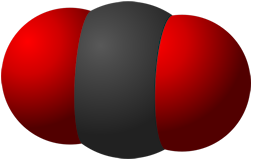 |
CO₂ | One carbon atom flanked by two oxygen atoms | 1 | The gas that gives pop its fizz. plants use it during photosynthesis, emitting oxygen. people, animals (and
machines) breathe it out during metabolism. if the concentration reaches 5%, it will kill you. though it
forms only 387 parts per million of the atmosphere, it acts like an effective planetary greenhouse.
CO₂
is one of the greenhouse gases. When high energy rays hit a molecule of CO₂, it converts them to
heat which cannot escape, warming up the earth. The same molecule of CO₂
can keep on converting rays ad infinitum. Because we humans have been burning fossil fuels at an astounding
rate, we have hugely increased the amount of CO₂
in the air and this powerful warming effect is getting out of hand.
As you have probably noticed if you warm pop or shake it, the CO₂ fizzes out into the air. The same thing happens to CO₂ dissolved in the ocean as global warming heats the water. This creates a vicious circle where the CO₂ released warms the water causing still more CO₂ to bubble out. You have a run-away effect. |
| methane |  |
CH₄ | One carbon atom surrounded by four hydrogen atoms in a tetrahedron. | 50 | Methane is fart gas. Globally livestock account for 18% of the greenhouse gas emissions. In impure form, used as a fuel, it is called natural gas, a cute euphemism. It can be harvested from decomposing manure or vegetation piles and burned as fuel to form CO₂, a much less problematic greenhouse case. |
| nitrous oxide |  |
N₂O | Nitrogen atom flanked by another nitrogen atom on one side and an oxygen atom on the other. | 296 | It is used as a propellant in canned whipped cream. It is also known as laughing gas. It is the secret behind Viagra. The world’s agrifuel corporations plan to triple the amount of nitrogen entering the world’s soil, a process which releases N₂O. Even as it is, almost half of greenhouse gases come from agricultural monoculture and its attendant long distance transportation and fertiliser production. |
What if we run into a tipping point where we have this kind of accelerated scenario of climate change? We’re gonna get our butts kicked.
~ Paul Roberts , The End of Oil: On the Edge of a Perilous New World
We have a lot of carbon stored in the permafrost and those permafrosts are starting to defrost and when they defrost that carbon is going to be oxidized to carbon dioxide or brought out as methane… and that will be a dramatic increase in greenhouse gases.
~ Douglas Crawford-Brown , Director, Carolina Environmental Program, UNC-Chapel Hill
We’re going to run out of air to burn before we run out of fossil fuels to burn.In other words, even before we run out of oil, we will have to stop burning it to avoid killing off the entire planet.
~ Richard Manning , Against the Grain: How Agriculture Has Hijacked Civilization
The problem is we are hopelessly dependent on oil for energy, chemicals, fertilizers, pumping water, making electricity etc. We have done almost nothing to prepare for the end of oil. Corporations are incapable of looking ahead more than a quarter or two, so that have not funded any research but window dressing. Government has been unwilling to fund research since campaign-contributing oil companies want the world to remain addicted to their products.
Petrochemicals, fossil fuels, have become embedded in our food supply. If we run out of fossil fuel, that strategy will collapse in a heartbeat.Without oil, the earth can only sustain the population it had roughly at the time of the American civil war, 1 billion. That means if we don’t plan for the end of oil, about 5 billion people will die so it is downright criminal to put your head in the sand or try to trick others into ignoring the problem.
~ Richard Manning , Against the Grain: How Agriculture Has Hijacked Civilization
Our global population is going to be reduced.The end of oil is not news. Even people in the 1800s understood oil was a finite, non-sustainable resource.
~ William R. Catton Jr. (1926-01-15 age:92), Professor Emeritus, Sociology & Human Ecology, Washington State University
Rational people will go quietly and meekly into a gas chamber if only you allow them to believe it’s a bathroom.
~ Zygmunt Bauman (1925-11-19 age:92)
There is no need to save the planet. It will be here a million years from now no matter what we do. We are really talking about saving humanity.
~ Patrick Moore (1947 age:70)
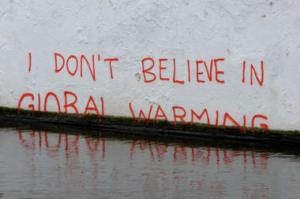
If you have a sick child and 98 doctors say she needs medication and two say she does not, I go with the 98 doctors.Despite fact the world’s climatologists are in near unanimous agreement that global warming is a major threat, the bulk of Americans ignore the warning and pretend to themselves there is no problem. Why?
~ Arnold Schwarzenegger (1947-07-30 age:70)
These findings contrast dramatically with the popular media’s reporting on climate change. One recent study analyzed coverage of climate change in four influential American newspapers (New York Times, Washington Post, LA Times and Wall Street Journal) over a 14-year period. It found that more than half of the articles discussing climate change gave equal weight to the scientifically discredited views of the skeptics.
Wishful thinkers, drooling wilfully-ignorant ninnies and scoundrels point to every snowfall or unusually cold day as irrefutable evidence that global warming is a hoax. Let me try a simplistic explanation for such people. First global warming is about climate (long term), not weather (daily). Global warming is about the fact there is more energy entering the entire planet’s atmosphere each day than leaving. Heat, light and wind are just different forms of energy. The main way you notice this energy buildup is increased average planetary annual temperature. But there are other ways this energy manifests, e.g. stronger winds, bigger hurricanes, warmer oceans (and hence different ocean currents), generally more extreme weather both hot and cold.
Think of a bowl of water at rest. There are no highs and lows on the surface. Now shake the bowl, i.e. add some energy to the system. The water will start jiggling. Scientists have a peculiar way of speaking based on their deeper understanding of thermodynamics than lay people have. They would say you are warming the bowl of water. Observed from a single point on the water’s surface, the water will alternatively be deeper and shallower than usual. Extra energy in the atmosphere creates greater extremes of low and high pressure areas, and greater extremes of temperature variations in a similar way, like looking at the jiggling water in slow motion.
So an abnormally cold day does not in any way contradict what scientists are saying about global warming. That is why many scientists now call it global climate change. Though on average the world gets hotter, a few parts get colder, some dryer, some wetter.
For millions of years, on average, one species became extinct every century.…We are now heaving more than a thousand different species of animals and plants off the planet every year.Global warming means massive change. Plants and crops cannot cope with that change in average temperature and the increase in temperature extremes. The biggest mass extinction of plants and animals since the age of the dinosaurs is happening right now as you read this. The effect of global warming is comparable to a giant meteor hitting the earth, like the one that ended the dinosaurs. Global warming manifests more gradually over decades and centuries, an eyeblink in evolutionary time, but slowly enough to lull most politicians into deadly procrastination, like the mythical frogs in hot water.
~ Douglas Adams (1952-03-11 2001-05-11 age:49), author of Last Chance to See
If you have ever made porridge, you turned on the stove and nothing happened. You waited and waited and finally you saw a few bubbles. Then suddenly the pot was heaving with great goopy bubbles of porridge and an instant later the whole mess overflowed onto the stove if you were not quick enough to turn down the heat. Scientists tell us that climate change works the same way, with nothing much appearing to happen then a sudden boiling over. We need to learn to turn down the heat well in time.
Conservative British Politician Lord Nigel Lawson counsels ignoring climate change on the grounds that doing something about it would be unfair to developing countries. Let’s assume that is correct. The solution then is for developed nations to make the process of dealing with global warming more fair, not to ignore the problem altogether and leave everyone to perish.
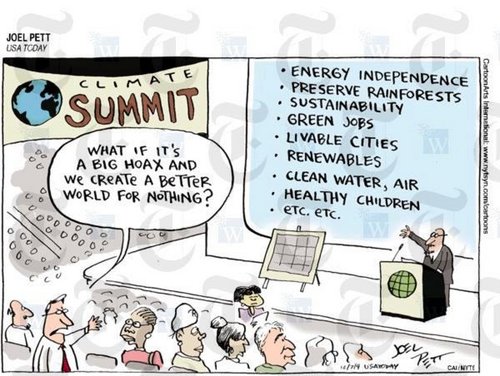 Journalist Bjørn Lomborg argues against dealing with climate change because there
are other issues he considered more important such as providing food and clean water for the planet’s billions
of people. He fails to acknowledge that climate change means failed crops, desertification, droughts and floods
— all of which seriously impact on even the possibility of providing food and water. You have to have the
resources before you can even consider distributing them and sharing them equitably. He also argues that it might be
costly, therefore we should do nothing. This is like a diabetic who refuses to give up sugar or a heart patient who
refuses to give up giant steaks because he like them.
Journalist Bjørn Lomborg argues against dealing with climate change because there
are other issues he considered more important such as providing food and clean water for the planet’s billions
of people. He fails to acknowledge that climate change means failed crops, desertification, droughts and floods
— all of which seriously impact on even the possibility of providing food and water. You have to have the
resources before you can even consider distributing them and sharing them equitably. He also argues that it might be
costly, therefore we should do nothing. This is like a diabetic who refuses to give up sugar or a heart patient who
refuses to give up giant steaks because he like them.
If vehicles were more fuel efficient, oil companies could charge the same as they do now, yet pump less oil. This would increase their profits and also make the reserves last longer. Instead, the fools lobby for fuel-inefficient vehicles.
Other businesses besides oil also have much to gain from Kyoto. More efficient use of energy always means higher profit in the long run, simply because it means reduced energy costs.
As the oil reserves are consumed, by the law of supply and demand, the prices of oil will rise. Black gold will go platinum. So irrespective of global warming, the world is going to be forced to switch to energy-efficient machines and vehicles.
We Canadians must decide whether we want to be the providers or merely the purchasers of that high-efficiency, low-emission technology. The sooner we adopt the new technology ourselves, the more likely we will become the providers to the world.
Sharp and the Japanese government are already tiling the roofs of Japan with solar panels. With that experience they believe they will soon develop a solution at less that $1 per watt that will be cheaper than hydro electric or coal/oil-fired electricity and the Japanese will rapidly dominate the global energy market. Does it make sense to hand this giant market to the Japanese on a plate by playing ostrich and pretending we can do oil business as-usual forever?
Christians are the most useless ninnies. Some Christians, based on no evidence at all, deny there is a problem. They trust their god would never allow such a dreadful thing to happen, so there is nothing to do. Another group of them say, Glory. The world is ending. I caint hardly wait to have lunch with Jesus. The rest of the Christians say, if only we were not such wicked people, this dreadful fate would not befall us. Our god is punishing us. We are doomed, so there is nothing to do. Arrgh! Would these nincompoops please get out the way of people who do want to take effective action.
Pollution is nothing but the resources we are not harvesting. We allow them to disperse because we’ve been ignorant of their value.According to Amory Lovins in the 2002 Summer edition of Orion Afield we have very powerful techniques now that can triple or quadruple the energy and water efficiency of most existing buildings. In new building the energy savings can be more like 90 percent and these buildings typically work better and cost less to build.
~ Richard Buckminster (Bucky) Fuller (1895-07-12 1983-07-01 age:87)
A 3mpg increase in the auto and light truck fleet is worth 1,000,000 barrels of oil a day.With all the potential for saving energy, its obvious that protecting the climate is not costly but profitable: saving fuel costs less than buying fuel. That’s why DuPont the world’s biggest chemical company, announced that in this decade its energy use won’t increase, even though its business is projected to grow by six percent a year because its goal is to get efficient at least that fast. STMicroelectronics, the fourth-biggest chip maker in the world has set a goal of zero net carbon emissions by the end of this decade, when they will be making 40 times the chips they made in 1990. British Petroleum just reached its 2010 carbon reduction goals seven years early — at a net profit of $650 million. These thing are being done in the name of shareholder value. Smart companies are behaving as if the USA had ratified the Kyoto protocol because they make more money that way. Washington will be the last to know.
~ Ernest J. Moniz (1944 age:73), Professor of Physics, [The giant tar sands of Canada, the last major untapped oil source, are projected to produce 3 million barrels of oil a day.]
Nicholas Stern, who heads Britain’s Government Economic Service and formerly served as the World Bank’s chief economist produced a report for the British Government on the economics of dealing with global climate change, pointing out the stupendous costs of ignoring the problem.
Failing to curb the impact of climate change could damage the global economy on the scale of the Great Depression or the world wars by spawning environmental devastation that could cost 5 to 20 percent of the world’s annual gross domestic product.
~ Nicholas Stern (1946-04-22 age:72)
The best evidence indicates that we need to reduce our CO₂ emissions by 70 per cent by 2050. [Kyoto round one aimed for only 6%]. If you own a four-wheel drive and replace it with a hybrid fuel car, you can achieve a cut of that magnitude in a day, rather than half a century. If your electricity provider offers a green option, for the cost of a daily cup of coffee, you will be able to make equally major cuts in your household emissions. And if you vote for a politician who has a deep commitment to reducing CO₂ emissions, you might change the world.Unhappily, even if everyone in the world immediately reduced emissions to zero, we would still get a significant increased global warming caused by the gases we have already so cavalierly leaked into the atmosphere in the past. Even with a 6% reduction we are just making a tiny dent in the global warming problem.
~ Tim Flannery (1956-01-28 age:62) The Weather Makers: How Man Is Changing the Climate and What It Means for Life on Earth
So the 6% reduction is just a start, not sufficient to rectify the problem. You have to start somewhere. The worst polluters, e.g. Canada and the USA are scheduled first. The lesser ones such as China are scheduled to follow later.
The problem is we have already pumped so big an excess of CO₂ into to atmosphere, even if in 2004 we took the entire world back below 2004 levels of emission, there would still be four times as much CO₂ as there was before the industrial revolution. We are pumping far greater amounts into the air than the natural systems, (trees, oceans, plant) can deal with. The natural systems can cope only with the natural sources (animals breathing, volcanoes), not with our overload.
It might take another 30 Kyotos over the next century to cut global warming down to size.
~ Jerry Mahlman (1940-02-21 age:78) is, director of the Geophysical Fluid Dynamics Laboratory at Princeton, Science Magazine
Canada is committed to reducing emission rates to 6% below what they were in 1990, which is 20% below the 2002 level and 35% below the projected 2010 business-as-usual level.
Even so, Kyoto is just a token start at the problem. The economic effects of the 6% reduction would barely be noticeable since the positive economic aspects of the cleanup would offset the negative. Economic factors like interest rates, exchange rates, wars and tariffs would dwarf the Kyoto effects.
For home appliances (e.g. refrigerators and washing machines) we already have the technology to cut the energy consumption in half. All it requires is gradually phasing them in. For automobiles we already have high efficiency vehicles. All we have to do is provide incentives to both manufacture and buy them and disincentives to both manufacture and buy inefficient SUVs (Sport Utility Vehicles).
An area 160.93 × 160.93 km (100 × 100 miles) in New Mexico covered with solar panels could provide all the energy needs of the USA. We need to create only a very few new clean energy plants to meet the 6% target.
Under George Herbert Walker Bush, the USA signed the Kyoto treaty on 1992-12-06. It ratified it in 1992-10-15. It came into effect on 1994-03-21. Under George Walker Bush, the USA reneged on the agreement in 2001.
There are only three other countries refusing to ratify the treaty: Australia, Monaco and Liechtenstein.
America’s excuse is that India and China should go first. Well, they have gone first. They have already ratified the agreement. The agreement was that Canada and the USA would develop the high technology required, field test it, then sell it to India and China.
When you work to reduce your energy and greenhouse gas footprint, you save money. Electricity costs about a kilowatt hour. If you left a 100 watt bulb on for a month, it would consume 100 * 24 * 30 = 72,000 watt-hours or 72 kilowatt-hours. That would cost . If you replaced that bulb with a 13 watt fluorescent, which is even brighter, it would cost only a month. This does not sound like much, but add up all the lighting in your house. Similarly consider other energy hogs like ovens (5000 watts), clothes dryer (5000 watts), water heater (3800 watts), microwave (1500 watts), toaster (1500 watts), fridge (200 to 700 watts), desktop computer with CRT (Cathode Ray Tube) Monitor (330 watts), TV (90 watts), LCD (Liquid Crystal Display) flat panel TV (40 watts). Anything you can do to replace these with more energy efficient devices, or turn them off then not in use will save you money. That computer’s power running 24/7 will cost you a month. If you turned on the hibernation feature and you used the computer four hours a day, that bill would drop to 1/6 as much — . To get an idea of what these devices are costing you, try out this energy calculator. You can cut your hot water bill by 40% by using a hot water heater that prewarms the water from heat in your outgoing wastewater. Similarly, you can save on your heating bill by warming incoming ventilation air with outgoing exhaust air.
Sometimes they will make up childish objections, even though they know they have only a primary school understanding of science and no inkling of how the scientists came to their conclusions. They pretend to themselves that they noticed some anomaly that all the scientists of the world missed, that if exposed, would triumph over all other knowledge about global warming. Walter Mittys all!
Global warming deniers like to dismiss all scientists as Jeremiahs or Cassandras. Consider that Cassandra of Greek mythology, famous for her dire predictions, was always right. Her curse was that no one would take action to avoid the catastrophes, despite her track record.
If I predict that placing your hands across a 10,000 volt AC (Alternating Current) line will kill you, it does not make me wrong just because my prediction is dire. If a doctor tells you that you have lung cancer and likely won’t last the year, it does not make him wrong, just because that is the last thing you wanted to hear. You can always find some quack who will sell you snake oil at inflated prices and tell you that everything will be fine, but that does not make him right.
Similarly you should not believe someone just because they predict dire consequences. That, in and of itself, means nothing. The church has been using that trick for centuries to manipulate people and extort them out of contributions, given in the hope of mollifying the vengeful, angry, control-freak god du jour.
In summary, it is childish to evaluate the correctness of a scientific prediction based on how pleasant the expected outcome.
If every American consumer brought their own reusable bags when shopping, we’ll cut more than a billion pounds of CO₂ this month — that’s the equivalent of taking 1.3 million cars off the road!Reusable bags are sturdier, bigger and more easier to carry than plastic or paper bags. My sister made me a big sturdy one of canvas with rainbow handles. Most organic grocery stores will sell you a hemp/canvas sack, nicely decorated. Some cities are outlawing plastic bags and some are insisting on reusable bags. Perhaps your city should follow suit.
Rebecca Young care2.com
When you move from place to place, how you travel determines the amount of CO₂ you emit in the process. The following graph shows how many grams of CO₂ you emit per PKT (Person-Kilometre of Travel). Lower is better.
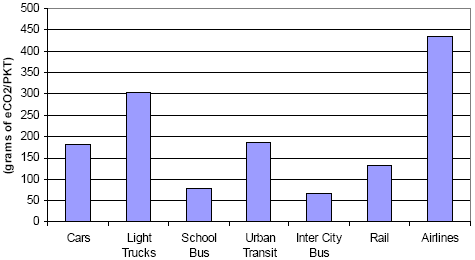 |
| CO2 emission per PKT |
So when you have a choice, pick bus or rail and avoid trucks and airplanes. Though not shown on this graph, helicopters are even worse than planes and SUVs are a type of light truck.
Less than 10% of the fuel energy burned in automobiles is translated into forward motion of the vehicle and even then most of this energy is needed to move the vehicle itself, which typically weighs 20 times more than its passengers.The less your car weighs, the proportionately less CO₂ it will emit. So use the lightest possible vehicle for any given transportation job. Switching to a hybrid cuts your CO₂ footprint in half. Hybrids are particularly well-adapted to the stop-go conditions of city driving. The surprise is how badly urban transit as a whole does. Urban transit often indulges in wasteful practices like large mostly-empty buses and diesel engines which are poorly adapted to the city’s stop and go traffic pattern. As they switch over to hybrids and fuel cells and light rail and optimally sized busses, their efficiency will improve.
~ David Suzuki Foundation (1990 age:27) 2002-09
Ideally we should institute a global value added carbon tax. It could be revenue neutral. Basically it would punish carbon emitters and reward those who reduce carbon emissions. If the VAT (Value Added Tax) were global, there would be no incentive for an individual country to go dirty to attract industry. It could start with individual countries instituting the tax based on the total carbon footprint of a product including mining, manufacturing and shipping. This would discourage dirty production in foreign countries too.
What I find odious is the USA refusing to clean up, using as its excuse that China is dirty too. Imagine two dirty little boys refusing to take a bath, each floating the excuse the other is dirty and staying dirty will encourage the other to bathe. What nonsense! If one boy climbs into the tub, the other is far more likely to conform too. You lead by example. You can’t very well demand behaviour from others you are unwilling to do yourself.
The following map distorts the size of countries relative to how bad their greenhouse gas emissions are. The figures used to generate the map are current as of 2002. Since then China has got much worse.
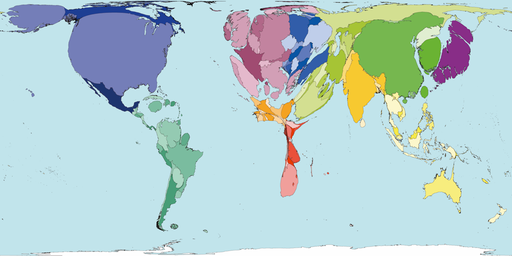
© Copyright SASI Group (University of Sheffield) and Mark Newman (University of Michigan)
A fairer way to measure how bad a country is behaving is to measure per capital emissions.
| Per Capita CO₂ Emissions by country | ||
|---|---|---|
| Rank | Country | Emissions
of CO₂ per capita |
| 1 | Qatar | 58.01 |
| 2 | United Arab Emirates | 29.91 |
| 3 | Bahrain | 28.23 |
| 4 | Kuwait | 25.09 |
| 5 | Netherlands Antilles | 23.57 |
| 6 | Luxembourg | 22.35 |
| 7 | Trinidad And Tobago | 21.85 |
| 8 | United States | 19.1 |
| 9 | Australia | 18.75 |
| 10 | Canada | 17.37 |
| 11 | Gibraltar | 16.79 |
| 12 | Brunei Darussalam | 14.97 |
| 13 | Saudi Arabia | 14.79 |
| 14 | Oman | 13.79 |
| 15 | Estonia | 13.45 |
| 16 | Kazakhstan | 12.3 |
| 17 | Finland | 12.19 |
| 18 | Czech Republic | 11.83 |
| 19 | Russian Federation | 11.21 |
| 20 | Netherlands | 11.13 |
| 21 | Ireland | 10.13 |
| 22 | Korea, Republic Of | 10.09 |
| 23 | Belgium | 9.97 |
| 24 | Singapore | 9.8 |
| 25 | Germany | 9.71 |
| 26 | Japan | 9.68 |
| 27 | Cyprus | 9.34 |
| 28 | Denmark | 9.24 |
| 29 | Israel | 9.19 |
| 30 | Turkmenistan | 9.13 |
| 31 | Greece | 8.74 |
| 32 | United Kingdom | 8.6 |
| 33 | New Zealand | 8.48 |
| 34 | Austria | 8.38 |
| 35 | Poland | 7.99 |
| 36 | Slovenia | 7.89 |
| 37 | Norway | 7.85 |
| 38 | Spain | 7.68 |
| 39 | Iceland | 7.53 |
| 40 | Italy | 7.38 |
| 41 | South Africa | 7.27 |
| 42 | Libyan Arab Jamahiriya | 7.01 |
| 43 | Slovakia | 6.82 |
| 44 | Ukraine | 6.77 |
| 45 | Serbia | 6.73 |
| 46 | Malaysia | 6.68 |
| 47 | Malta | 6.65 |
| 48 | Bulgaria | 6.57 |
| 49 | Iran, Islamic Republic Of | 6.56 |
| 50 | Belarus | 6.46 |
| 51 | Hong Kong | 6.26 |
| 52 | France | 5.81 |
| 53 | Switzerland | 5.62 |
| 54 | Hungary | 5.36 |
| 55 | Venezuela | 5.24 |
| 56 | Portugal | 5.2 |
| 57 | Sweden | 5.05 |
| 58 | Croatia | 4.96 |
| 59 | Bosnia And Herzegovina | 4.77 |
| 60 | Jamaica | 4.74 |
| 61 | China | 4.57 |
| 62 | Macedonia, The Former Yugoslav Republic Of | 4.48 |
| 63 | Mongolia | 4.32 |
| 64 | Chile | 4.28 |
| 65 | Lithuania | 4.28 |
| 66 | Romania | 4.27 |
| 67 | Uzbekistan | 4.22 |
| 68 | Mexico | 4.14 |
| 69 | Argentina | 4.12 |
| 70 | Latvia | 3.66 |
| 71 | Turkey | 3.59 |
| 72 | Thailand | 3.54 |
| 73 | Jordan | 3.35 |
| 74 | Iraq | 3.33 |
| 75 | Azerbaijan | 3.22 |
| 76 | Lebanon | 2.77 |
| 77 | Syrian Arab Republic | 2.7 |
| 78 | Korea, Democratic People’s Republic Of | 2.62 |
| 79 | Algeria | 2.53 |
| 80 | Botswana | 2.53 |
| 81 | Cuba | 2.32 |
| 82 | Egypt | 2.24 |
| 83 | Ecuador | 2.02 |
| 84 | Tunisia | 2.0 |
| 85 | Dominican Republic | 1.98 |
| 86 | Moldova, Republic Of | 1.98 |
| 87 | Panama | 1.94 |
| 88 | Gabon | 1.92 |
| 89 | Brazil | 1.81 |
| 90 | Uruguay | 1.73 |
| 91 | Indonesia | 1.67 |
| 92 | Armenia | 1.6 |
| 93 | Namibia | 1.54 |
| 94 | Costa Rica | 1.47 |
| 95 | Morocco | 1.32 |
| 96 | Bolivia | 1.29 |
| 97 | Albania | 1.27 |
| 98 | Colombia | 1.21 |
| 99 | India | 1.18 |
| 100 | Georgia | 1.17 |
| 101 | Honduras | 1.15 |
| 102 | Viet Nam | 1.1 |
| 103 | Kyrgyzstan | 1.09 |
| 104 | Peru | 1.09 |
| 105 | Tajikistan | 1.02 |
| 106 | Yemen | 0.92 |
| 107 | El Salvador | 0.91 |
| 108 | Guatemala | 0.88 |
| 109 | Pakistan | 0.85 |
| 110 | Philippines | 0.82 |
| 111 | Nicaragua | 0.79 |
| 112 | Zimbabwe | 0.7 |
| 113 | Sri Lanka | 0.64 |
| 114 | Angola | 0.63 |
| 115 | Paraguay | 0.6 |
| 116 | Ghana | 0.38 |
| 117 | Benin | 0.35 |
| 118 | Nigeria | 0.35 |
| 119 | Congo | 0.34 |
| 120 | Senegal | 0.34 |
| 121 | Cambodia | 0.31 |
| 122 | Kenya | 0.3 |
| 123 | Sudan | 0.28 |
| 124 | Côte D’Ivoire | 0.26 |
| 125 | Bangladesh | 0.25 |
| 126 | Cameroon | 0.25 |
| 127 | Myanmar | 0.25 |
| 128 | Haiti | 0.24 |
| 129 | Zambia | 0.2 |
| 130 | Togo | 0.14 |
| 131 | Tanzania, United Republic Of | 0.13 |
| 132 | Eritrea | 0.11 |
| 133 | Nepal | 0.11 |
| 134 | Mozambique | 0.09 |
| 135 | Ethiopia | 0.08 |
| 136 | Congo, Democratic Republic Of The | 0.04 |
The idea of the carbon tax is to make people pay X dollars a tonne to release CO₂ into the air. If this price is higher than the cost of modifying the equipment, then businesses will naturally prefer to make the modifications to avoid the tax. However, it has to get up about a tonne for this to happen. The Liberals are calling for about a ton and gradually ramping it up. The problem with this is nothing happens to start. It is just a way of raising money, not reducing carbon. The liberals say they will reduce income tax so that the average person will come out the same as before. Heavy polluters/consumers will come out worse. People with a light CO₂ footprint (e.g. people who use public transport of bikes instead of cars) will come out ahead.
Factory A does this for other factories as well. The scheme thus has an incentive to get its emissions down to 0 right away and to develop or buy the equipment to do it. This research makes it easier for factory B to reduce its own emissions.
Each year the government lowers the bar on acceptable emissions. This increases the cost of a traded tonne of carbon, putting more pressure on everyone to lower their emissions so they won’t have to buy any credits and so they will have some to sell.
This is a friendly system to industry since it lets them reduce CO₂ in the cheapest most efficient places.
We would have to pull every truck and car off the street, shut down every train and ground every plane to reach the Kyoto target. Or we could shut off all the lights in Canada tomorrow.This is a croque de merde (crock of shit). All it would take is some mandatory fuel efficiency standards on automobiles. Cars in 2006 are no more efficient than they were in 1982.
~ Rona Ambrose (1969-03-15 age:49), Canada’s Environment Minister
The new Conservative government is dedicated to making global warming worse. They have pulled the website and the environment minister and the Prime Minister have been spreading FUD and outright lies about global warming. It is imperative they be removed form office quickly by hook or by crook, using all means fair and foul. It is also important to let them know you are doing that. They might change their tune.
Stephen Harper is 300 pounds of condemned beef.Premier Klein and the Alberta oil patch interests have put a ton of money into sinking Kyoto, even though it is against their own long-term economic best interests. Their propaganda was having an effect on Canadian public opinion, though it was not sufficient to derail Kyoto. Prime Minister Chrétien ratified the Kyoto treaty. Write to Stephen Harper to urge him to get on with implementation and to tell him you will work to remove him from office by any means necessary if he does not.
~ Mary Walsh (1952-05-15 age:65)
Make a simple threat. If you don’t get behind Kyoto, I will vote for someone who will.
Write or email your Member of the federal Canadian Parliament or any other Member of Parliament or
Justin Trudeau
Office of the Prime Minister
80 Wellington Street
Ottawa, Ontario, Canada
K1A 0A2
Fax: (613) 941-6900
It is best to hand write your letter. However, in a pinch you can email:justin.trudeau@parl.gc.ca No postage is required to send a letter to any Member
of Parliament. Only mail sent to the House of Commons in Ottawa (that is, House of Commons, Ottawa, Ontario, K1A 0A6) is eligible. Just write the letters O.H.M.S. where you would normally put a
stamp.
Conservatives don’t yet have an interim leader.
Thomas Mulcair, Leader of the NDP party thomas.mulcair@parl.gc.ca
Write your American federal Senator, Member of the House of Representatives or
Donald J. Trump
The White House
1600 Pennsylvania Avenue NW
Washington, DC 20500 USA
It is best to hand write your letter. However, in a pinch you can email:president@whitehouse.gov
Write or email your Member of the UK Parliament
British MPs usually ignore mail from anyone but their constituents.
David Cameron
Office of the Prime Minister
10 Downing Street
London, UK SW1A 2AA
Fax: 020 7925 0918
No postage is required to send a letter to any Member of Parliament. Only mail sent to the House of Commons is eligible. Just write the letters O.H.M.S. where you would normally put a stamp.
Humanity is conducting an unintended, uncontrolled, globally pervasive experiment whose ultimate consequences could be second only to global nuclear war.
~ Environment Canada (1971 age:46) (The Canadian equivalent of the EPA (Environmental Protection Agency))
Global warming threatens the survival of our species
~ Lucien Bouchard (1938-12-22 age:79), Environment minister in the Conservative Mulroney administration of Canada


 10 parts
 companion book, DVD.
According to Associated Press, 100 Scientists OKed Gore’s movie for accuracy. BitTorrent 782 MB .
companion book, DVD.
According to Associated Press, 100 Scientists OKed Gore’s movie for accuracy. BitTorrent 782 MB . |
recommend DVD⇒Carbo₂n Nation | |||||||||||||||||||||||||
| DVD | ||||||||||||||||||||||||||
| by | Peter Byck [director] | |||||||||||||||||||||||||
| birth | 1956-12-06 age:61 | |||||||||||||||||||||||||
| asin | B005BO5OQ0 | |||||||||||||||||||||||||
| upc | 634479999642 | |||||||||||||||||||||||||
| Various ideas to curb global warming. It bills itself as the movie that doesn’t even care if you believe in global warming. website. | ||||||||||||||||||||||||||
| ||||||||||||||||||||||||||
| Greyed out stores probably do not have the item in stock | ||||||||||||||||||||||||||
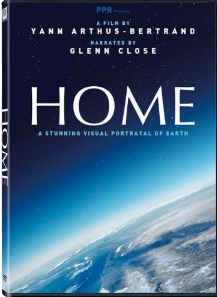 |
recommend DVD⇒Home: a stunning visual portrayal of Earth | |||||||||||||||||||||||||
| DVD | ||||||||||||||||||||||||||
| by | Yann Arthus-Bertrand | |||||||||||||||||||||||||
| birth | 1946-03-13 age:72 | |||||||||||||||||||||||||
| asin | B0026OE2NY | |||||||||||||||||||||||||
| upc | 024543613336 | |||||||||||||||||||||||||
| Documentary about the big picture of life on earth including the history of life. | ||||||||||||||||||||||||||
| ||||||||||||||||||||||||||
| Greyed out stores probably do not have the item in stock | ||||||||||||||||||||||||||
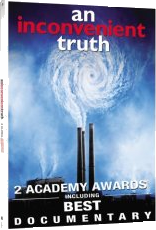 |
recommend DVD⇒An Inconvenient Truth | |||||||||||||||||||||||||
| DVD | ||||||||||||||||||||||||||
| by | Al Gore | |||||||||||||||||||||||||
| birth | 1948-03-31 age:70 | |||||||||||||||||||||||||
| asin | B000ICL3KG | |||||||||||||||||||||||||
| upc | 097363480846 | |||||||||||||||||||||||||
| The most famous climate change documentary of them all. Gore gave his presentation hundreds of times, so it is polished to a brilliant shine. He is funny, engaging and entertaining. | ||||||||||||||||||||||||||
| ||||||||||||||||||||||||||
| Greyed out stores probably do not have the item in stock | ||||||||||||||||||||||||||
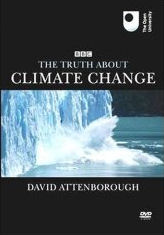 |
recommend DVD⇒The Truth About Climate Change | |||||||||||||||||||||||||
| DVD | ||||||||||||||||||||||||||
| by | Sir David Attenborough | |||||||||||||||||||||||||
| birth | 1926-05-08 age:91 | |||||||||||||||||||||||||
| asin | B00179CXIK | |||||||||||||||||||||||||
| upc | 097363480860 | |||||||||||||||||||||||||
| Britain’s most famous naturalist holds forth. Only available in Britain. Make sure to get the version you buy has a region than can be handled by your player. | ||||||||||||||||||||||||||
| ||||||||||||||||||||||||||
| Greyed out stores probably do not have the item in stock | ||||||||||||||||||||||||||
 |
recommend DVD⇒The End of Suburbia: Oil Depletion and the Collapse of The American Dream | |||||||||||||||||||||||||
| DVD | ||||||||||||||||||||||||||
| by | Gregory Greene | |||||||||||||||||||||||||
| asin | B0009231TG | |||||||||||||||||||||||||
| upc | 689076361026 | |||||||||||||||||||||||||
About peak oil and the effect the end of cheap energy will have on suburbia. We simply won’t be able to use cars to live in suburbia. We won’t be able to afford to heat McHomes. We won’t be able to afford to transport the ingredients 3000 miles for a Caesar salad. We won’t be able to afford the gas to travel to barn stores like Wal-Mart and they won’t be able to afford to transport goods all the way from China. We will have to start learning to make everything including food and energy locally. There is no point in building more gas-fired electric plants. We don’t have enough gas flow to drive them. The movie points out that even if nuclear (expensive), coal (dirty), hydro (none left to exploit), wind, solar, biomass etc. were all implemented in a crash program starting today, they would come nowhere near producing enough energy for our current energy-wasteful lifestyle. Hydrogen is not a fuel; it is just a way of transporting energy cleanly. You need electricity or natural gas to create it. No matter what, our energy-guzzling lifestyle will end no matter how much we whine and stamp our feet that it couldn’t or shouldn’t happen. It doesn’t matter that it isn’t fair. Nature and history don’t care. We will have to do more with less energy. We have absolutely no choice but to rethink our energy priorities, to cut back, to conserve and to create more efficient ways to use energy. The people behind the film are an interesting assortment including:
| ||||||||||||||||||||||||||
| ||||||||||||||||||||||||||
| Greyed out stores probably do not have the item in stock | ||||||||||||||||||||||||||
 |
recommend book⇒Junk Science: How Politicians, Corporations and Other Hucksters Betray Us | |||||||||||||||||||||||||||||||||||||||||||||||||||||||
| by | Dan Agin | 978-0-312-35241-7 | hardcover | |||||||||||||||||||||||||||||||||||||||||||||||||||||
|---|---|---|---|---|---|---|---|---|---|---|---|---|---|---|---|---|---|---|---|---|---|---|---|---|---|---|---|---|---|---|---|---|---|---|---|---|---|---|---|---|---|---|---|---|---|---|---|---|---|---|---|---|---|---|---|---|
| publisher | Thomas Dunne | |||||||||||||||||||||||||||||||||||||||||||||||||||||||
| published | 2006-10-03 | |||||||||||||||||||||||||||||||||||||||||||||||||||||||
Dan Agin has a PhD in biological psychology and thirty years of laboratory research experience in neurobiology. He is Associate Professor Emeritus of Molecular Genetics and Cell Biology at the University of Chicago. He explains how business, government, neocons and organisations twist scientific data for various nefarious purposes. He tackles a wide range of subjects besides global warming:
| ||||||||||||||||||||||||||||||||||||||||||||||||||||||||
| ||||||||||||||||||||||||||||||||||||||||||||||||||||||||
| Greyed out stores probably do not have the item in stock. Try looking for it with a bookfinder. | ||||||||||||||||||||||||||||||||||||||||||||||||||||||||
 |
recommend book⇒Plan B 4.0 — Mobilising to Save Civilisation | |||||||||||||||||||||||||||||||||||||||||||||||||||||||
| by | Lester Russel Brown | 978-0-393-33719-8 | paperback | |||||||||||||||||||||||||||||||||||||||||||||||||||||
|---|---|---|---|---|---|---|---|---|---|---|---|---|---|---|---|---|---|---|---|---|---|---|---|---|---|---|---|---|---|---|---|---|---|---|---|---|---|---|---|---|---|---|---|---|---|---|---|---|---|---|---|---|---|---|---|---|
| birth | 1934-03-28 age:84 | 978-0-393-07103-0 | hardcover | |||||||||||||||||||||||||||||||||||||||||||||||||||||
| publisher | Norton | 978-0-393-07809-1 | eBook | |||||||||||||||||||||||||||||||||||||||||||||||||||||
| published | 2009-10-05 | B002QATWE2 | kindle | |||||||||||||||||||||||||||||||||||||||||||||||||||||
| This is a good overview of climate change, alternative energy and the major global problems facing us. It was made into an excellent documentary shown on PBS. | ||||||||||||||||||||||||||||||||||||||||||||||||||||||||
| ||||||||||||||||||||||||||||||||||||||||||||||||||||||||
| Greyed out stores probably do not have the item in stock. Try looking for it with a bookfinder. | ||||||||||||||||||||||||||||||||||||||||||||||||||||||||
 |
recommend book⇒The Regional City: Planning for the End of Sprawl | |||||||||||||||||||||||||||||||||||||||||||||||||||||||
| by | Peter Calthorpe | 978-1-55963-784-8 | paperback | |||||||||||||||||||||||||||||||||||||||||||||||||||||
|---|---|---|---|---|---|---|---|---|---|---|---|---|---|---|---|---|---|---|---|---|---|---|---|---|---|---|---|---|---|---|---|---|---|---|---|---|---|---|---|---|---|---|---|---|---|---|---|---|---|---|---|---|---|---|---|---|
| publisher | Island | 978-1-55963-783-1 | hardcover | |||||||||||||||||||||||||||||||||||||||||||||||||||||
| published | 2001-01 | 978-1-59726-621-5 | eBook | |||||||||||||||||||||||||||||||||||||||||||||||||||||
| B00CB27AFS | kindle | |||||||||||||||||||||||||||||||||||||||||||||||||||||||
Oil is not like a gas tank where the gas flows just fine down to the last drop. The older a well is, the harder it is to suck oil out of it and the heavier and lower quality the oil is. It costs progressively more over time to refine the oil and push it out with steam or natural gas. So the world supply of oil won’t just suddenly end one day. It will gradually peter out following a bell-shaped curve similar to the production curve of an individual well. We are at about the peak now. Experts disagree when the precise peak was or will be, but is somewhere in the vicinity 2000 to 2013. The big problem predicting the precise point is that we don’t have accurate estimates of oil reserves. There are economic reasons for oil companies both the over and understate their reserves. Further, the precise timing of the peak depends on high prices depressing demand, wars disrupting production and economic pressure to pump existing wells even faster. The shit hits the fan long before oil runs out completely. Our economy is based on increasing the supply of energy by 3% a year. The flow of oil will be decreasing instead, causing oil prices to skyrocket from the shortfall. We have to adjust to that. The way we operate now, the economy is totally dependent on cheap energy. A power blackout hitting all of eastern Canada and the USA in 2003 was at 4:13 PM on an unusually hot summer day. The problem was overload, with commercial, residential and industrial loads all high, running air conditioners. There simply was not enough power from the gas generating plants to cover the load. Because the entire system was running at so close to capacity, a failure triggered a chain reaction of breakers blowing. Cities came to a standstill. This is a warning of similar trouble to come. Peak oil in the USA was back in the 1970s, exactly when Geophysicist Dr. M. King Hubbert, predicted. Amusingly people continued to ridicule him even in the year of peak oil. Peak oil is not the year oil runs out. It is the high point plateau. From an idiot’s perspective, in the peak year, things never looked better. From then on, less and less oil is produced. The coming high cost of energy will reverse the trend to globalisation. Creating power will become a local community concern. Everything from food production to furniture manufacturing will tend to be done locally again, simply to avoid the high costs of transportation. | ||||||||||||||||||||||||||||||||||||||||||||||||||||||||
| ||||||||||||||||||||||||||||||||||||||||||||||||||||||||
| Greyed out stores probably do not have the item in stock. Try looking for it with a bookfinder. | ||||||||||||||||||||||||||||||||||||||||||||||||||||||||
 |
recommend book⇒The Coming Oil Crisis | |||
| by | Colin Campbell | 978-0-906522-39-4 | paperback | |
|---|---|---|---|---|
| birth | 1931 age:86 | |||
| publisher | Multi-Science | |||
| published | 2005-09-28 | |||
| The crucial question which Campbell addresses in his book is how much oil remains to be found and for how long global oil resources can continue to support the expected growth in demand. | ||||
| Greyed out stores probably do not have the item in stock. Try looking for it with a bookfinder. | ||||
 |
recommend book⇒Hard Choices: Climate Change in Canada | |||||||||||||||||||||||||||||||||||||||||||||||||||||||
| by | Harold Coward and Andrew J. Weaver | 978-0-88920-442-3 | paperback | |||||||||||||||||||||||||||||||||||||||||||||||||||||
|---|---|---|---|---|---|---|---|---|---|---|---|---|---|---|---|---|---|---|---|---|---|---|---|---|---|---|---|---|---|---|---|---|---|---|---|---|---|---|---|---|---|---|---|---|---|---|---|---|---|---|---|---|---|---|---|---|
| publisher | Wilfrid Laurier University | |||||||||||||||||||||||||||||||||||||||||||||||||||||||
| published | 2004-05 | |||||||||||||||||||||||||||||||||||||||||||||||||||||||
| A collection of essays by leading Canadian scientists, engineers, social scientists and humanists that offers an overview and assessment of climate change and its impacts on Canada from physical, social, technological, economic, political and ethical / religious perspectives. Interpreting and summarizing the large and complex literatures from each of these disciplines, the book offers a multidisciplinary approach to the challenges we face in Canada. Special attention is given to Canada’s response to the Kyoto Protocol, as well as an assessment of the overall adequacy of Kyoto as a response to the global challenge of climate change | ||||||||||||||||||||||||||||||||||||||||||||||||||||||||
| ||||||||||||||||||||||||||||||||||||||||||||||||||||||||
| Greyed out stores probably do not have the item in stock. Try looking for it with a bookfinder. | ||||||||||||||||||||||||||||||||||||||||||||||||||||||||
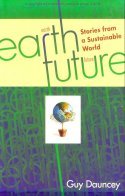 |
recommend book⇒Earthfuture — Stories from a Sustainable World | |||||||||||||||||||||||||||||||||||||||||||||||||||||||
| by | Guy Dauncey | 978-0-86571-407-6 | paperback | |||||||||||||||||||||||||||||||||||||||||||||||||||||
|---|---|---|---|---|---|---|---|---|---|---|---|---|---|---|---|---|---|---|---|---|---|---|---|---|---|---|---|---|---|---|---|---|---|---|---|---|---|---|---|---|---|---|---|---|---|---|---|---|---|---|---|---|---|---|---|---|
| birth | 1948 age:69 | |||||||||||||||||||||||||||||||||||||||||||||||||||||||
| publisher | New Society Publishers | |||||||||||||||||||||||||||||||||||||||||||||||||||||||
| published | 2000-02-01 | |||||||||||||||||||||||||||||||||||||||||||||||||||||||
As we enter the 21st century, the greatest challenges we face may not be environmental, but psychological — a failure of vision prompted by a world beset by so many problems that people have lost hope and fear that things can only get worse. Earthfuture restores optimism by providing us with positive and achievable, alternatives. Earthfuture presents over 40 provocative and inspiring glimpses into a world that people are managing to make sustainable. They are premised on the idea that, if we can visualize a paradise on Earth, then we can create it. Set in the early years of the new millennium, it is a world of ecovillages and self-organizing city neighborhoods, of near-zero garbage and climate-friendly cars, of work-sharing and social investment, of neighborhood democracy and the syntropy revolution, of a world-wide sustainable trade and environment treaty and the Earth Pledge. In short, it is a world where wealth is defined by peace, a healthy environment and the high quality of our relationships. At the same time, it is not, of course, a world without its nightmares — such as antibiotic-resistant bacteria and genetic pollution. Nor is it without its difficult choices — ecologically managed forests versus business-as-usual, or the free-flow of city traffic versus community gardens… With its mix of utopian fiction and reportage of near-reality, Earthfuture sows the seeds of an alternative future with skill and obvious delight. Highly readable and accessible, it will appeal to a wide readership including social and environmental activists, progressive urban planners and local government officials and students in environmental, social and urban studies and community economic development — as well as the general reader tired of the doom and gloom. earthfuture.com | ||||||||||||||||||||||||||||||||||||||||||||||||||||||||
| ||||||||||||||||||||||||||||||||||||||||||||||||||||||||
| Greyed out stores probably do not have the item in stock. Try looking for it with a bookfinder. | ||||||||||||||||||||||||||||||||||||||||||||||||||||||||
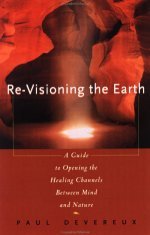 |
recommend book⇒Re-Visioning the Earth: A Guide TO Opening The Healing Channels Between Mind And Nature. | |||||||||||||||||||||||||||||||||||||||||||||||||||||||
| by | Paul Devereux | 978-0-684-80063-9 | paperback | |||||||||||||||||||||||||||||||||||||||||||||||||||||
|---|---|---|---|---|---|---|---|---|---|---|---|---|---|---|---|---|---|---|---|---|---|---|---|---|---|---|---|---|---|---|---|---|---|---|---|---|---|---|---|---|---|---|---|---|---|---|---|---|---|---|---|---|---|---|---|---|
| publisher | Fireside | |||||||||||||||||||||||||||||||||||||||||||||||||||||||
| published | 1996-10-23 | |||||||||||||||||||||||||||||||||||||||||||||||||||||||
This is an unusual book, about how different cultures experience the natural world. Our experience depends much more on our Western cultural conditioning than we would ever imagine. It also tackles the slippery question what is consciousness? It is one of the few books I have seen that tackle the same subjects as my essay called Experience Is A Hallucination. The truth surely is what we may ultimately come to do is destroy the particular type of life as we know it. If that happens, then, of course, our species would die off (alas, taking make other species with it): in the grim final analysis, the problem would be self-correcting. The earth can be a stern as well as bountiful mother and were we to disappear she would have the ages that belong to her in which to restore herself before giving birth to other orders of life. Earth’s song will go on whether or not we are part of it. | ||||||||||||||||||||||||||||||||||||||||||||||||||||||||
| ||||||||||||||||||||||||||||||||||||||||||||||||||||||||
| Greyed out stores probably do not have the item in stock. Try looking for it with a bookfinder. | ||||||||||||||||||||||||||||||||||||||||||||||||||||||||
 |
recommend book⇒Collapse: How Societies Choose to Fail or Succeed: Revised Edition | |||||||||||||||||||||||||||||||||||||||||||||||||||||||
| by | Jared Diamond | 978-0-14-311700-1 | paperback | |||||||||||||||||||||||||||||||||||||||||||||||||||||
|---|---|---|---|---|---|---|---|---|---|---|---|---|---|---|---|---|---|---|---|---|---|---|---|---|---|---|---|---|---|---|---|---|---|---|---|---|---|---|---|---|---|---|---|---|---|---|---|---|---|---|---|---|---|---|---|---|
| birth | 1937-09-10 age:80 | 978-0-670-03337-9 | hardcover | |||||||||||||||||||||||||||||||||||||||||||||||||||||
| publisher | Penguin | 978-1-101-50200-6 | eBook | |||||||||||||||||||||||||||||||||||||||||||||||||||||
| published | 2011-01-04 | 978-0-14-305718-5 | audio | |||||||||||||||||||||||||||||||||||||||||||||||||||||
| B004H0M8EA | kindle | |||||||||||||||||||||||||||||||||||||||||||||||||||||||
| This book is not about global warming per se, just the ostrich-like mindset humans adopt to deal with such problems. This is a very broad look at the collapse of civilisations throughout history and the way societies ignored the environmental problems that eventually did them in. He covers such diverse cultures as the Anasazi of the American Southwest, the Viking colonies in Greenland and modern Rwanda. Not every collapse has an environmental origin, but an eco-meltdown is often the main catalyst. Recommended by Bill Moyers in his address to the Hamilton College graduating class. | ||||||||||||||||||||||||||||||||||||||||||||||||||||||||
| ||||||||||||||||||||||||||||||||||||||||||||||||||||||||
| Greyed out stores probably do not have the item in stock. Try looking for it with a bookfinder. | ||||||||||||||||||||||||||||||||||||||||||||||||||||||||
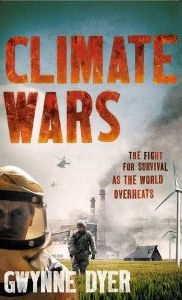 |
recommend book⇒Climate Wars: The Fight for Survival as the World Overheats | |||||||||||||||||||||||||||||||||||||||||||||||||||||||
| by | Gwynne Dyer | 978-1-85168-742-8 | paperback | |||||||||||||||||||||||||||||||||||||||||||||||||||||
|---|---|---|---|---|---|---|---|---|---|---|---|---|---|---|---|---|---|---|---|---|---|---|---|---|---|---|---|---|---|---|---|---|---|---|---|---|---|---|---|---|---|---|---|---|---|---|---|---|---|---|---|---|---|---|---|---|
| birth | 1943-04-17 age:75 | 978-1-85168-718-3 | hardcover | |||||||||||||||||||||||||||||||||||||||||||||||||||||
| publisher | Oneworld | B0031TZAXO | kindle | |||||||||||||||||||||||||||||||||||||||||||||||||||||
| published | 2010-06-16 | |||||||||||||||||||||||||||||||||||||||||||||||||||||||
| This is book about the climatalogical future we are marching toward like the proverbial lemmings. Dyer takes the scientists’ statistics and fleshes them out with what sort of world they describe. It is far worse than you would ever imagine. We are literally collectively choosing a fate worse than death. I own an autographed copy from when Mr. Dyer came to Victoria to speak. | ||||||||||||||||||||||||||||||||||||||||||||||||||||||||
| ||||||||||||||||||||||||||||||||||||||||||||||||||||||||
| Greyed out stores probably do not have the item in stock. Try looking for it with a bookfinder. | ||||||||||||||||||||||||||||||||||||||||||||||||||||||||
 |
recommend book⇒The Weather Makers: How Man Is Changing the Climate and What It Means for Life on Earth | |||||||||||||||||||||||||||||||||||||||||||||||||||||||
| by | Tim Flannery | 978-0-8021-4292-4 | paperback | |||||||||||||||||||||||||||||||||||||||||||||||||||||
|---|---|---|---|---|---|---|---|---|---|---|---|---|---|---|---|---|---|---|---|---|---|---|---|---|---|---|---|---|---|---|---|---|---|---|---|---|---|---|---|---|---|---|---|---|---|---|---|---|---|---|---|---|---|---|---|---|
| birth | 1956-01-28 age:62 | 978-0-87113-935-1 | hardcover | |||||||||||||||||||||||||||||||||||||||||||||||||||||
| publisher | Atlantic Monthly | 978-1-4193-9634-2 | audio | |||||||||||||||||||||||||||||||||||||||||||||||||||||
| published | 2006-01-27 | B00563LCDK | kindle | |||||||||||||||||||||||||||||||||||||||||||||||||||||
| This is the book Jack Layton, leader of the New Democratic Party gave to Stephen Harper, the Prime Minister of Canada to bring him up to speed on global warming. Tim Flannery offers specific suggestions for action for both lawmakers and individuals, from investing in renewable power sources like wind, solar and geothermal energy, to offering an action plan with steps each and every one of us can take right now to reduce deadly CO₂ emissions by as much as 70 percent. This book contains much of the science of how we know what we know about global warming accessible to the scientifically minded layperson. It also talks quite a bit about the effects of global warming on plants and animals, namely their extinctions. The main problem with it is it is so chock full of detail the key points can easily be overlooked. It is a book you would like on your desk for debating the global warming deniers. Flannery has a very pleasant speaking voice, with an Aussie twang. He has a way of speaking that makes things simple, obvious and clear. Not as dry as some other works. | ||||||||||||||||||||||||||||||||||||||||||||||||||||||||
| ||||||||||||||||||||||||||||||||||||||||||||||||||||||||
| Greyed out stores probably do not have the item in stock. Try looking for it with a bookfinder. | ||||||||||||||||||||||||||||||||||||||||||||||||||||||||
 |
recommend book⇒Hot, Flat and Crowded: Why We Need a Green Revolution — and How It Can Renew America | |||||||||||||||||||||||||||||||||||||||||||||||||||||||
| by | Thomas Friedman | 978-0-312-42892-1 | paperback | |||||||||||||||||||||||||||||||||||||||||||||||||||||
|---|---|---|---|---|---|---|---|---|---|---|---|---|---|---|---|---|---|---|---|---|---|---|---|---|---|---|---|---|---|---|---|---|---|---|---|---|---|---|---|---|---|---|---|---|---|---|---|---|---|---|---|---|---|---|---|---|
| birth | 1953-07-20 age:64 | 978-0-374-16685-4 | hardcover | |||||||||||||||||||||||||||||||||||||||||||||||||||||
| publisher | Farrar, Straus and Giroux | 978-1-4299-6368-8 | eBook | |||||||||||||||||||||||||||||||||||||||||||||||||||||
| published | 2008-09-08 | 978-1-4272-0458-5 | audio | |||||||||||||||||||||||||||||||||||||||||||||||||||||
| Already the earth is being affected in ways that threaten to make it dangerously unstable. In just a few years, it will be too late to fix things — unless the United States steps up now and takes the lead in a worldwide effort to replace our wasteful, inefficient energy practices with a strategy for clean energy, energy efficiency and conservation that Friedman calls Code Green. | ||||||||||||||||||||||||||||||||||||||||||||||||||||||||
| ||||||||||||||||||||||||||||||||||||||||||||||||||||||||
| Greyed out stores probably do not have the item in stock. Try looking for it with a bookfinder. | ||||||||||||||||||||||||||||||||||||||||||||||||||||||||
 |
recommend book⇒Boiling Point: How Politicians, Big Oil and Coal, Journalists and Activists Are Fueling the Climate Crisis — And What We Can Do to Avert Disaster | |||||||||||||||||||||||||||||||||||||||||||||||||||||||
| by | Ross Gelbspan | 978-0-465-02762-0 | paperback | |||||||||||||||||||||||||||||||||||||||||||||||||||||
|---|---|---|---|---|---|---|---|---|---|---|---|---|---|---|---|---|---|---|---|---|---|---|---|---|---|---|---|---|---|---|---|---|---|---|---|---|---|---|---|---|---|---|---|---|---|---|---|---|---|---|---|---|---|---|---|---|
| publisher | Basic | 978-0-465-02761-3 | hardcover | |||||||||||||||||||||||||||||||||||||||||||||||||||||
| published | 2005-11-08 | 978-0-465-01341-8 | eBook | |||||||||||||||||||||||||||||||||||||||||||||||||||||
| B003P9XDMA | kindle | |||||||||||||||||||||||||||||||||||||||||||||||||||||||
| Gelbspan is the Boston Globe reporter to exposed the various global warming skeptics as both being secretly on the take from the oil and coal industry and also spreading bogus science. Now he documents how politician and journalists too are on the take to spread lies to lull the public into doing nothing about global warming. This book has been reissued several times. His previous book was called The Heat Is on: The Climate Crisis, the Cover-Up, the Prescription. | ||||||||||||||||||||||||||||||||||||||||||||||||||||||||
| ||||||||||||||||||||||||||||||||||||||||||||||||||||||||
| Greyed out stores probably do not have the item in stock. Try looking for it with a bookfinder. | ||||||||||||||||||||||||||||||||||||||||||||||||||||||||
 |
recommend book⇒Our Choice: A Plan to Solve the Climate Crisis | |||||||||||||||||||||||||||||||||||||||||||||||||||||||
| by | Al Gore | 978-1-59486-734-7 | paperback | |||||||||||||||||||||||||||||||||||||||||||||||||||||
|---|---|---|---|---|---|---|---|---|---|---|---|---|---|---|---|---|---|---|---|---|---|---|---|---|---|---|---|---|---|---|---|---|---|---|---|---|---|---|---|---|---|---|---|---|---|---|---|---|---|---|---|---|---|---|---|---|
| birth | 1948-03-31 age:70 | 978-0-7435-7204-0 | audio | |||||||||||||||||||||||||||||||||||||||||||||||||||||
| publisher | Rodale | |||||||||||||||||||||||||||||||||||||||||||||||||||||||
| published | 2009-11-03 | |||||||||||||||||||||||||||||||||||||||||||||||||||||||
| Gore argues you don’t have to choose between the environment or the economy. You need to see the new green economy as an opportunity. | ||||||||||||||||||||||||||||||||||||||||||||||||||||||||
| ||||||||||||||||||||||||||||||||||||||||||||||||||||||||
| Greyed out stores probably do not have the item in stock. Try looking for it with a bookfinder. | ||||||||||||||||||||||||||||||||||||||||||||||||||||||||
 |
recommend book⇒An Inconvenient Truth | |||
| by | Al Gore | 978-1-59486-567-1 | paperback | |
|---|---|---|---|---|
| birth | 1948-03-31 age:70 | 978-0-7475-9042-2 | hardcover | |
| publisher | Rodale | 978-0-7435-7202-6 | audio | |
| published | 2006-05-26 | |||
| Companion book to Al Gore’s movie An Inconvenient Truth about global warming. | ||||
| Greyed out stores probably do not have the item in stock. Try looking for it with a bookfinder. | ||||
 |
recommend book⇒The Last Hours of Ancient Sunlight: Revised and Updated: The Fate of the World and What We Can Do Before It’s Too Late | |||||||||||||||||||||||||||||||||||||||||||||||||||||||
| by | Thom Hartmann, Neale Donald Walsch, Joseph Chilton Pearce [Afterword] | 978-1-4000-5157-1 | paperback | |||||||||||||||||||||||||||||||||||||||||||||||||||||
|---|---|---|---|---|---|---|---|---|---|---|---|---|---|---|---|---|---|---|---|---|---|---|---|---|---|---|---|---|---|---|---|---|---|---|---|---|---|---|---|---|---|---|---|---|---|---|---|---|---|---|---|---|---|---|---|---|
| birth | 1951-05-07 age:66 | 978-0-609-60546-2 | hardcover | |||||||||||||||||||||||||||||||||||||||||||||||||||||
| publisher | Broadway | 978-0-307-42213-2 | eBook | |||||||||||||||||||||||||||||||||||||||||||||||||||||
| published | 2004-04-27 | B000XUDGSK | kindle | |||||||||||||||||||||||||||||||||||||||||||||||||||||
| A spiritual approach to conversion to a renewable energy economy. | ||||||||||||||||||||||||||||||||||||||||||||||||||||||||
| ||||||||||||||||||||||||||||||||||||||||||||||||||||||||
| Greyed out stores probably do not have the item in stock. Try looking for it with a bookfinder. | ||||||||||||||||||||||||||||||||||||||||||||||||||||||||
 |
recommend book⇒The Next American Metropolis: Ecology, Community and the American Dream | |||||||||||||||||||||||||||||||||||||||||||||||||||||||
| by | Peter Calthorpe | 978-1-878271-68-6 | paperback | |||||||||||||||||||||||||||||||||||||||||||||||||||||
|---|---|---|---|---|---|---|---|---|---|---|---|---|---|---|---|---|---|---|---|---|---|---|---|---|---|---|---|---|---|---|---|---|---|---|---|---|---|---|---|---|---|---|---|---|---|---|---|---|---|---|---|---|---|---|---|---|
| publisher | Princeton Architectural | |||||||||||||||||||||||||||||||||||||||||||||||||||||||
| published | 1995-12-01 | |||||||||||||||||||||||||||||||||||||||||||||||||||||||
| Architects, community planners, ecologists and biologists contribute ideas for developing largely self-reliant communities, drastically cutting the use of fossil fuels and putting regional economies in balance. | ||||||||||||||||||||||||||||||||||||||||||||||||||||||||
| ||||||||||||||||||||||||||||||||||||||||||||||||||||||||
| Greyed out stores probably do not have the item in stock. Try looking for it with a bookfinder. | ||||||||||||||||||||||||||||||||||||||||||||||||||||||||
 |
recommend book⇒The End of Growth: Adapting to Our New Economic Reality | |||||||||||||||||||||||||||||||||||||||||||||||||||||||
| by | Richard Heinberg | 978-0-86571-695-7 | paperback | |||||||||||||||||||||||||||||||||||||||||||||||||||||
|---|---|---|---|---|---|---|---|---|---|---|---|---|---|---|---|---|---|---|---|---|---|---|---|---|---|---|---|---|---|---|---|---|---|---|---|---|---|---|---|---|---|---|---|---|---|---|---|---|---|---|---|---|---|---|---|---|
| birth | 1950-10-21 age:67 | 978-1-55092-483-1 | eBook | |||||||||||||||||||||||||||||||||||||||||||||||||||||
| publisher | New Society Publishers | 978-1-4526-5590-1 | audio | |||||||||||||||||||||||||||||||||||||||||||||||||||||
| published | 2011-08-09 | B0056C1V5U | kindle | |||||||||||||||||||||||||||||||||||||||||||||||||||||
| He argues that the expansionary trajectory of industrial civilization is colliding with non-negotiable natural limits. If you think about it, anything that grows exponentially, e.g. exploding rat populations, nuclear fission can’t go on indefinitely. It is just a matter of when the shit will hit the fan. website. | ||||||||||||||||||||||||||||||||||||||||||||||||||||||||
| ||||||||||||||||||||||||||||||||||||||||||||||||||||||||
| Greyed out stores probably do not have the item in stock. Try looking for it with a bookfinder. | ||||||||||||||||||||||||||||||||||||||||||||||||||||||||
 |
recommend book⇒The Oil Depletion Protocol: A Plan to Avert Oil Wars, Terrorism and Economic Collapse | |||||||||||||||||||||||||||||||||||||||||||||||||||||||
| by | Richard Heinberg | 978-0-86571-563-9 | paperback | |||||||||||||||||||||||||||||||||||||||||||||||||||||
|---|---|---|---|---|---|---|---|---|---|---|---|---|---|---|---|---|---|---|---|---|---|---|---|---|---|---|---|---|---|---|---|---|---|---|---|---|---|---|---|---|---|---|---|---|---|---|---|---|---|---|---|---|---|---|---|---|
| birth | 1950-10-21 age:67 | B0029LH1VO | kindle | |||||||||||||||||||||||||||||||||||||||||||||||||||||
| publisher | New Society Publishers | |||||||||||||||||||||||||||||||||||||||||||||||||||||||
| published | 2006-09 | |||||||||||||||||||||||||||||||||||||||||||||||||||||||
| An explication of Dr. Colin Campbell’s pioneering Oil Depletion Protocol. The book describes an accord whereby nations would voluntarily reduce their oil production and oil imports according to a consistent, sensible formula. This would enable energy transition to be planned and supported over the long term, providing a context of stable energy prices and peaceful cooperation. The protocol will be presented at international gatherings, initiating the process of country-by-country negotiation and adoption and mobilizing public support. website. | ||||||||||||||||||||||||||||||||||||||||||||||||||||||||
| ||||||||||||||||||||||||||||||||||||||||||||||||||||||||
| Greyed out stores probably do not have the item in stock. Try looking for it with a bookfinder. | ||||||||||||||||||||||||||||||||||||||||||||||||||||||||
 |
recommend book⇒Party’s Over: Oil, War and the Fate of Industrial Societies | |||||||||||||||||||||||||||||||||||||||||||||||||||||||
| by | Richard Heinberg | 978-0-86571-529-5 | paperback | |||||||||||||||||||||||||||||||||||||||||||||||||||||
|---|---|---|---|---|---|---|---|---|---|---|---|---|---|---|---|---|---|---|---|---|---|---|---|---|---|---|---|---|---|---|---|---|---|---|---|---|---|---|---|---|---|---|---|---|---|---|---|---|---|---|---|---|---|---|---|---|
| birth | 1950-10-21 age:67 | 978-0-613-92089-6 | hardcover | |||||||||||||||||||||||||||||||||||||||||||||||||||||
| publisher | New Society Publishers | 978-1-55092-334-6 | eBook | |||||||||||||||||||||||||||||||||||||||||||||||||||||
| published | 2005-06-01 | B004FPZ3DK | kindle | |||||||||||||||||||||||||||||||||||||||||||||||||||||
| Oil is peaking. The supply is getting smaller each year. Just what are the implications? Heinberg sees the only viable option as a global program of resource conservation and sharing. Predicting chaos unless the U.S. — the world’s foremost oil consumer — is willing to join with other countries to implement a global program of resource conservation and sharing, he also recommends a managed collapse, that might make way for a slower-paced, low-energy, sustainable society in the future. website. The opening chapters of the book give a lucid, simple, but not simplistic recap of the basic physics, biology, history and ecology you need to know as background to understand the energy crunch. When I was reading this section, it dawned on me that most Americans are completely ignorant of this basic science. That is why they approach the energy and global warming problem is such a superstitious and irrational way. | ||||||||||||||||||||||||||||||||||||||||||||||||||||||||
| ||||||||||||||||||||||||||||||||||||||||||||||||||||||||
| Greyed out stores probably do not have the item in stock. Try looking for it with a bookfinder. | ||||||||||||||||||||||||||||||||||||||||||||||||||||||||
 |
recommend book⇒Powerdown: Options and Actions for a Post-Carbon World | |||||||||||||||||||||||||||||||||||||||||||||||||||||||
| by | Richard Heinberg | 978-0-86571-510-3 | paperback | |||||||||||||||||||||||||||||||||||||||||||||||||||||
|---|---|---|---|---|---|---|---|---|---|---|---|---|---|---|---|---|---|---|---|---|---|---|---|---|---|---|---|---|---|---|---|---|---|---|---|---|---|---|---|---|---|---|---|---|---|---|---|---|---|---|---|---|---|---|---|---|
| birth | 1950-10-21 age:67 | 978-1-55092-337-7 | eBook | |||||||||||||||||||||||||||||||||||||||||||||||||||||
| publisher | New Society Publishers | B003VPWWHU | kindle | |||||||||||||||||||||||||||||||||||||||||||||||||||||
| published | 2004-08-15 | |||||||||||||||||||||||||||||||||||||||||||||||||||||||
| If the US continues with its current policies, the next decades will be marked by war, economic collapse and environmental catastrophe. Resource depletion and population pressures are about to catch up with us and no one is prepared. The political elites, especially in the US, are incapable of dealing with the situation and have in mind a punishing game of Last One Standing. The alternative is Powerdown, a strategy that will require tremendous effort and economic sacrifice in order to reduce per-capita resource usage in wealthy countries, develop alternative energy sources, distribute resources more equitably and reduce the human population humanely but systematically over time. While civil society organizations push for a mild version of this, the vast majority of the world’s people are in the dark, not understanding the challenges ahead, nor the options realistically available. website. | ||||||||||||||||||||||||||||||||||||||||||||||||||||||||
| ||||||||||||||||||||||||||||||||||||||||||||||||||||||||
| Greyed out stores probably do not have the item in stock. Try looking for it with a bookfinder. | ||||||||||||||||||||||||||||||||||||||||||||||||||||||||
 |
recommend book⇒Climate Cover-Up | |||
| by | James Hoggan & Richard Littlemore | 978-1-55365-485-8 | paperback | |
|---|---|---|---|---|
| publisher | Greystone | 978-1-926706-77-1 | eBook | |
| published | 2009-09-29 | B002Z14KWQ | kindle | |
Anti-science (or agnotology), seeks to cover-up or obscure science considered inconvenient, or at least create doubt in the minds of public and decision-makers. It seeks to replace knowledge with ignorance and has no resemblance to normal arguments within science, by scientists. Modern anti-science is most skillfully executed by a relatively small subset of lobbyists and PR agencies. Some of the most effective are actually thinktanks. They have public identities distinct from their (often-unidentified) funders and can often be labeled ”non-profit”, thus avoiding the expense of taxes. They often seek funding in the same way as lobbyist/PR agencies, as is well-documented in the Tobacco Archives. Such entities have played successful rôle s in activities like fending off tobacco regulation, fighting CFC regulation (ozone hole), fighting mercury regulation, etc. For some, their top priority has changed to obfuscating climate science. Anyone who can help keep children getting addicted to tobacco should find it easy to create confusion about climate. So, if you wonder how and why so many people, especially in North America, are confused about the current state of climate science, this is an excellent introduction to the key players and tactics. It exposes billionaires, like brothers Charles and David Koch (#9 and #10 richest Americans), who fund fake grass roots opposition to climate change action and fund fake experts. In my view, not necessarily Hoggan’s, the Kochs are far more of a danger to the planet than Hitler. If they succeed, they will kill far more people than Hitler ever dreamed of killing and wipe out the earth’s large mammals. Desmogblog details | ||||
| Greyed out stores probably do not have the item in stock. Try looking for it with a bookfinder. | ||||
 |
recommend book⇒2030: Confronting Thermageddon in Our Lifetime | |||||||||||||||||||||||||||||||||||||||||||||||||||||||
| by | Bob Hunter | 978-0-7710-4231-7 | paperback | |||||||||||||||||||||||||||||||||||||||||||||||||||||
|---|---|---|---|---|---|---|---|---|---|---|---|---|---|---|---|---|---|---|---|---|---|---|---|---|---|---|---|---|---|---|---|---|---|---|---|---|---|---|---|---|---|---|---|---|---|---|---|---|---|---|---|---|---|---|---|---|
| birth | 1941-10-13 2005-05-02 age:63 | 978-0-7710-4238-6 | hardcover | |||||||||||||||||||||||||||||||||||||||||||||||||||||
| publisher | McClelland & Stewart | |||||||||||||||||||||||||||||||||||||||||||||||||||||||
| published | 2003-04-29 | |||||||||||||||||||||||||||||||||||||||||||||||||||||||
| Bob Hunter was Canada’s first environmentalist. He died in 2005. | ||||||||||||||||||||||||||||||||||||||||||||||||||||||||
| ||||||||||||||||||||||||||||||||||||||||||||||||||||||||
| Greyed out stores probably do not have the item in stock. Try looking for it with a bookfinder. | ||||||||||||||||||||||||||||||||||||||||||||||||||||||||
 |
recommend book⇒This Changes Everything: Capitalism vs. the Climate | |||||||||||||||||||||||||||||||||||||||||||||||||||||||
| by | Naomi Klein | 978-1-84614-506-3 | paperback | |||||||||||||||||||||||||||||||||||||||||||||||||||||
|---|---|---|---|---|---|---|---|---|---|---|---|---|---|---|---|---|---|---|---|---|---|---|---|---|---|---|---|---|---|---|---|---|---|---|---|---|---|---|---|---|---|---|---|---|---|---|---|---|---|---|---|---|---|---|---|---|
| birth | 1970-05-08 age:47 | 978-0-307-40199-1 | hardcover | |||||||||||||||||||||||||||||||||||||||||||||||||||||
| publisher | Knopf Canada | 978-1-4423-7291-7 | audio | |||||||||||||||||||||||||||||||||||||||||||||||||||||
| published | 2014-09-16 | B00JHIDON6 | kindle | |||||||||||||||||||||||||||||||||||||||||||||||||||||
| This book won Canada’s richest literary prize, the 2014 Hillary Weston Prize. She explains how people like Prime Minister Harper simply do not understand the way ecology trumps economics. They think they have no choice but to get on the fossil fuel bandwagon and destroy the planet. | ||||||||||||||||||||||||||||||||||||||||||||||||||||||||
| ||||||||||||||||||||||||||||||||||||||||||||||||||||||||
| Greyed out stores probably do not have the item in stock. Try looking for it with a bookfinder. | ||||||||||||||||||||||||||||||||||||||||||||||||||||||||
 |
recommend book⇒Geography of Nowhere: The Rise And Decline of America’s Man-Made Landscape | |||||||||||||||||||||||||||||||||||||||||||||||||||||||
| by | James Howard Kunstler | 978-0-671-88825-1 | paperback | |||||||||||||||||||||||||||||||||||||||||||||||||||||
|---|---|---|---|---|---|---|---|---|---|---|---|---|---|---|---|---|---|---|---|---|---|---|---|---|---|---|---|---|---|---|---|---|---|---|---|---|---|---|---|---|---|---|---|---|---|---|---|---|---|---|---|---|---|---|---|---|
| birth | 1948-10-19 age:69 | 978-0-671-70774-3 | hardcover | |||||||||||||||||||||||||||||||||||||||||||||||||||||
| publisher | Free | B00F7OM1HE | kindle | |||||||||||||||||||||||||||||||||||||||||||||||||||||
| published | 1994-07-26 | |||||||||||||||||||||||||||||||||||||||||||||||||||||||
| This is no-hold’s barred sort of guy who uses words like cluster-fuck and shit-storm. He applies his gutsy style who what at first would seem a genteel subject. He passionately argue for a return to European style walkable cities, towns and villages, with strong neighbourhood connections. He hates suburbia and argues why it is doomed to become the new slums because of the coming energy crunch. | ||||||||||||||||||||||||||||||||||||||||||||||||||||||||
| ||||||||||||||||||||||||||||||||||||||||||||||||||||||||
| Greyed out stores probably do not have the item in stock. Try looking for it with a bookfinder. | ||||||||||||||||||||||||||||||||||||||||||||||||||||||||
 |
recommend book⇒Home From Nowhere: Remaking our everyday World For the 21st Century | |||||||||||||||||||||||||||||||||||||||||||||||||||||||
| by | James Howard Kunstler | 978-0-684-83737-6 | paperback | |||||||||||||||||||||||||||||||||||||||||||||||||||||
|---|---|---|---|---|---|---|---|---|---|---|---|---|---|---|---|---|---|---|---|---|---|---|---|---|---|---|---|---|---|---|---|---|---|---|---|---|---|---|---|---|---|---|---|---|---|---|---|---|---|---|---|---|---|---|---|---|
| birth | 1948-10-19 age:69 | 978-0-684-81196-3 | hardcover | |||||||||||||||||||||||||||||||||||||||||||||||||||||
| publisher | Touchstone | |||||||||||||||||||||||||||||||||||||||||||||||||||||||
| published | 1998-03-26 | |||||||||||||||||||||||||||||||||||||||||||||||||||||||
| All the things that have to change to make cities livable from zoning laws to automobiles. | ||||||||||||||||||||||||||||||||||||||||||||||||||||||||
| ||||||||||||||||||||||||||||||||||||||||||||||||||||||||
| Greyed out stores probably do not have the item in stock. Try looking for it with a bookfinder. | ||||||||||||||||||||||||||||||||||||||||||||||||||||||||
 |
recommend book⇒The Long Emergency: Surviving the End of Oil, Climate Change and Other Converging Catastrophes of the Twenty-First Century | |||||||||||||||||||||||||||||||||||||||||||||||||||||||
| by | James Howard Kunstler | 978-0-8021-4249-8 | paperback | |||||||||||||||||||||||||||||||||||||||||||||||||||||
|---|---|---|---|---|---|---|---|---|---|---|---|---|---|---|---|---|---|---|---|---|---|---|---|---|---|---|---|---|---|---|---|---|---|---|---|---|---|---|---|---|---|---|---|---|---|---|---|---|---|---|---|---|---|---|---|---|
| birth | 1948-10-19 age:69 | 978-0-87113-888-0 | hardcover | |||||||||||||||||||||||||||||||||||||||||||||||||||||
| publisher | Grove | 978-1-55584-670-1 | eBook | |||||||||||||||||||||||||||||||||||||||||||||||||||||
| published | 2006-03-02 | B0015KGXR8 | kindle | |||||||||||||||||||||||||||||||||||||||||||||||||||||
| A rather bleak book about the coming oil crunch. He argues why alternative energy will not be able to fill the gap and how that will lead to the collapse of cities. There is a natural human tendency to want to dismiss dire predictions as false just because they are depressing. Consider that Cassandra of mythology, famous for her dire predictions, was always right. Her curse was that no one would take action to avoid the catastrophes, despite her track record. Consider also how the world might be quite different if people in the 1930s had not buried their heads in the sand as to what a danger Hitler was becoming. I went to see him speak. Kunstler is an opinionated, urban, pragmatic New Yorker, far from the tree hugger you might imagine. Recommended by Bill Moyers in his address to the Hamilton College graduating class. | ||||||||||||||||||||||||||||||||||||||||||||||||||||||||
| ||||||||||||||||||||||||||||||||||||||||||||||||||||||||
| Greyed out stores probably do not have the item in stock. Try looking for it with a bookfinder. | ||||||||||||||||||||||||||||||||||||||||||||||||||||||||
 |
recommend book⇒The Winds of Change: Climate, Weather and the Destruction of Civilizations | |||||||||||||||||||||||||||||||||||||||||||||||||||||||
| by | Eugene Linden | 978-0-684-86353-5 | paperback | |||||||||||||||||||||||||||||||||||||||||||||||||||||
|---|---|---|---|---|---|---|---|---|---|---|---|---|---|---|---|---|---|---|---|---|---|---|---|---|---|---|---|---|---|---|---|---|---|---|---|---|---|---|---|---|---|---|---|---|---|---|---|---|---|---|---|---|---|---|---|---|
| publisher | Simon & Schuster | 978-0-684-86352-8 | hardcover | |||||||||||||||||||||||||||||||||||||||||||||||||||||
| published | 2006-02-07 | 978-0-684-86352-8 | eBook | |||||||||||||||||||||||||||||||||||||||||||||||||||||
| This book argues the last few hundred years have been a fluke of extremely pleasant climate. That mildness is not at all typical for earth and there are many signs it will soon end, irrespective of man-created global warming. He is angry the way politicians have ignored the findings of science. Recommended by Bill Moyers in his address to the Hamilton College graduating class. | ||||||||||||||||||||||||||||||||||||||||||||||||||||||||
| ||||||||||||||||||||||||||||||||||||||||||||||||||||||||
| Greyed out stores probably do not have the item in stock. Try looking for it with a bookfinder. | ||||||||||||||||||||||||||||||||||||||||||||||||||||||||
 |
recommend book⇒Six Degrees, our future on a hotter planet | |||||||||||||||||||||||||||||||||||||||||||||||||||||||
| by | Mark Lynas | 978-0-00-720904-0 | paperback | |||||||||||||||||||||||||||||||||||||||||||||||||||||
|---|---|---|---|---|---|---|---|---|---|---|---|---|---|---|---|---|---|---|---|---|---|---|---|---|---|---|---|---|---|---|---|---|---|---|---|---|---|---|---|---|---|---|---|---|---|---|---|---|---|---|---|---|---|---|---|---|
| birth | 1973 age:44 | 978-1-4262-0213-1 | hardcover | |||||||||||||||||||||||||||||||||||||||||||||||||||||
| publisher | National Geographic | 978-0-00-732352-4 | eBook | |||||||||||||||||||||||||||||||||||||||||||||||||||||
| published | 2008-01-22 | B002RI9F0E | kindle | |||||||||||||||||||||||||||||||||||||||||||||||||||||
| This is a very accessible book. Lynas spent years reading peer reviewed articles about global warming in scientific journals. He summarises them in ordinary English. The data are arranged in 6 chapters, each one describing what you could expect to happen if the world increased average temperature by 1, 2, 3 … 6 degrees centigrade. Even one degree made by hair stand on end. Scientists tend to underestimate. They would far sooner that results turned out even more dramatically than they predicted. Things are already deteriorating far faster than predicted. Much of the peer-reviewed literature is about what would happen in particular parts of the globe. Lynas puts it all together into six comprehensive pictures. | ||||||||||||||||||||||||||||||||||||||||||||||||||||||||
| ||||||||||||||||||||||||||||||||||||||||||||||||||||||||
| Greyed out stores probably do not have the item in stock. Try looking for it with a bookfinder. | ||||||||||||||||||||||||||||||||||||||||||||||||||||||||
 |
recommend book⇒Against the Grain: How Agriculture Has Hijacked Civilization | |||||||||||||||||||||||||||||||||||||||||||||||||||||||
| by | Richard Manning | 978-0-86547-713-1 | paperback | |||||||||||||||||||||||||||||||||||||||||||||||||||||
|---|---|---|---|---|---|---|---|---|---|---|---|---|---|---|---|---|---|---|---|---|---|---|---|---|---|---|---|---|---|---|---|---|---|---|---|---|---|---|---|---|---|---|---|---|---|---|---|---|---|---|---|---|---|---|---|---|
| publisher | North Point | 978-0-86547-622-6 | hardcover | |||||||||||||||||||||||||||||||||||||||||||||||||||||
| published | 2005-01-13 | 978-1-4668-2342-6 | eBook | |||||||||||||||||||||||||||||||||||||||||||||||||||||
| B008KP2ZM8 | kindle | |||||||||||||||||||||||||||||||||||||||||||||||||||||||
| This explains why modern oil-based agriculture is not sustainable. You probably think there is no alternative, but when you understand all the problems it is causing, you will see there is at least room for doing less damage and making it more sustainable. Without oil, the way we are doing things will have to end. We must start thinking about how we can create a low-energy way of getting our food. | ||||||||||||||||||||||||||||||||||||||||||||||||||||||||
| ||||||||||||||||||||||||||||||||||||||||||||||||||||||||
| Greyed out stores probably do not have the item in stock. Try looking for it with a bookfinder. | ||||||||||||||||||||||||||||||||||||||||||||||||||||||||
 |
recommend book⇒Fools Rule: Inside the Failed Politics of Climate Change | |||||||||||||||||||||||||||||||||||||||||||||||||||||||
| by | William Marsden | 978-0-307-39825-3 | paperback | |||||||||||||||||||||||||||||||||||||||||||||||||||||
|---|---|---|---|---|---|---|---|---|---|---|---|---|---|---|---|---|---|---|---|---|---|---|---|---|---|---|---|---|---|---|---|---|---|---|---|---|---|---|---|---|---|---|---|---|---|---|---|---|---|---|---|---|---|---|---|---|
| publisher | Knopf | 978-0-307-39824-6 | hardcover | |||||||||||||||||||||||||||||||||||||||||||||||||||||
| published | 2011-10-25 | 978-0-307-36673-3 | eBook | |||||||||||||||||||||||||||||||||||||||||||||||||||||
| B004J4XGDG | kindle | |||||||||||||||||||||||||||||||||||||||||||||||||||||||
| Marsden is an investigative reporter for the Montréal Gazette. It is not a book about climate change but about the activities of planetary traitors who have worked ceaselessly to block efforts to fight climate change. | ||||||||||||||||||||||||||||||||||||||||||||||||||||||||
| ||||||||||||||||||||||||||||||||||||||||||||||||||||||||
| Greyed out stores probably do not have the item in stock. Try looking for it with a bookfinder. | ||||||||||||||||||||||||||||||||||||||||||||||||||||||||
 |
recommend book⇒Global Warming For Dummies | |||||||||||||||||||||||||||||||||||||||||||||||||||||||
| by | Elizabeth May | 978-0-470-84098-6 | paperback | |||||||||||||||||||||||||||||||||||||||||||||||||||||
|---|---|---|---|---|---|---|---|---|---|---|---|---|---|---|---|---|---|---|---|---|---|---|---|---|---|---|---|---|---|---|---|---|---|---|---|---|---|---|---|---|---|---|---|---|---|---|---|---|---|---|---|---|---|---|---|---|
| birth | 1954-06-09 age:63 | 978-0-470-73858-0 | eBook | |||||||||||||||||||||||||||||||||||||||||||||||||||||
| publisher | For Dummies | B0015DTV24 | kindle | |||||||||||||||||||||||||||||||||||||||||||||||||||||
| published | 2008-11-24 | |||||||||||||||||||||||||||||||||||||||||||||||||||||||
Elizabeth May is the articulate leader of the Green Party. The book explains global warming aka global climate change presuming no prior knowledge. Like all Dummy books it contains only generally accepted facts, no opinions. One of the main points it makes is that there is no longer controversy about global warming among scientists. Global warming is as solid as gravity or that smoking is harmful. The book covers:
What we’re saying today is that you’re either part of the solution or you’re part of the problem.. I have had the pleasure of talking extensively with her on several occasions. I always go to watch her speak publicly. She is a hoot. She is informed. She is so lovable. She has a way of talking to you as if you were her best friend. | ||||||||||||||||||||||||||||||||||||||||||||||||||||||||
| ||||||||||||||||||||||||||||||||||||||||||||||||||||||||
| Greyed out stores probably do not have the item in stock. Try looking for it with a bookfinder. | ||||||||||||||||||||||||||||||||||||||||||||||||||||||||
 |
recommend book⇒How to Save the World in Your Spare Time | |||||||||||||||||||||||||||||||||||||||||||||||||||||||
| by | Elizabeth May | 978-1-55263-781-4 | paperback | |||||||||||||||||||||||||||||||||||||||||||||||||||||
|---|---|---|---|---|---|---|---|---|---|---|---|---|---|---|---|---|---|---|---|---|---|---|---|---|---|---|---|---|---|---|---|---|---|---|---|---|---|---|---|---|---|---|---|---|---|---|---|---|---|---|---|---|---|---|---|---|
| birth | 1954-06-09 age:63 | |||||||||||||||||||||||||||||||||||||||||||||||||||||||
| publisher | Key Porter | |||||||||||||||||||||||||||||||||||||||||||||||||||||||
| published | 2007-03-16 | |||||||||||||||||||||||||||||||||||||||||||||||||||||||
| Elizabeth May is the articulate leader of the Green Party. It gives general advice about how to fight for a cause. It covers how to get the media to pay attention, lobbying. | ||||||||||||||||||||||||||||||||||||||||||||||||||||||||
| ||||||||||||||||||||||||||||||||||||||||||||||||||||||||
| Greyed out stores probably do not have the item in stock. Try looking for it with a bookfinder. | ||||||||||||||||||||||||||||||||||||||||||||||||||||||||
 |
recommend book⇒Stormy Weather: 101 Solutions to Global Climate Change | |||||||||||||||||||||||||||||||||||||||||||||||||||||||
| by | Guy Dauncey, Patrick Mazza | 978-0-86571-421-2 | paperback | |||||||||||||||||||||||||||||||||||||||||||||||||||||
|---|---|---|---|---|---|---|---|---|---|---|---|---|---|---|---|---|---|---|---|---|---|---|---|---|---|---|---|---|---|---|---|---|---|---|---|---|---|---|---|---|---|---|---|---|---|---|---|---|---|---|---|---|---|---|---|---|
| birth | 1948 age:69 | 978-0-613-92092-6 | hardcover | |||||||||||||||||||||||||||||||||||||||||||||||||||||
| publisher | New Society Publishers | |||||||||||||||||||||||||||||||||||||||||||||||||||||||
| published | 2001-07 | |||||||||||||||||||||||||||||||||||||||||||||||||||||||
| Guy is incredibly energetic and optimistic. I have heard him speak publicly many times and have talked with him personally and exchanged many emails. He is good people. earthfuture.com | ||||||||||||||||||||||||||||||||||||||||||||||||||||||||
| ||||||||||||||||||||||||||||||||||||||||||||||||||||||||
| Greyed out stores probably do not have the item in stock. Try looking for it with a bookfinder. | ||||||||||||||||||||||||||||||||||||||||||||||||||||||||
 |
recommend book⇒Holding the Bully’s Coat: Canada and the U.S. Empire | |||||||||||||||||||||||||||||||||||||||||||||||||||||||
| by | Linda McQuaig | 978-0-385-66012-9 | hardcover | |||||||||||||||||||||||||||||||||||||||||||||||||||||
|---|---|---|---|---|---|---|---|---|---|---|---|---|---|---|---|---|---|---|---|---|---|---|---|---|---|---|---|---|---|---|---|---|---|---|---|---|---|---|---|---|---|---|---|---|---|---|---|---|---|---|---|---|---|---|---|---|
| birth | 1951 age:66 | 978-0-385-67216-0 | eBook | |||||||||||||||||||||||||||||||||||||||||||||||||||||
| publisher | Doubleday Canada | B003Q6DG60 | kindle | |||||||||||||||||||||||||||||||||||||||||||||||||||||
| published | 2007-03-22 | |||||||||||||||||||||||||||||||||||||||||||||||||||||||
As the United States has become a belligerent and lawless force under George W. Bush, the Canadian government has followed in close step. Attempting to please our powerful neighbour, Ottawa has abandoned Canada’s traditional rôle as a leading peacekeeping nation and instead adopted a more militaristic, warlike stance, battling insurgents in Afghanistan as a junior partner in the U.S. war on terror Ottawa has also abandoned Canada’s traditional attempt to be a fair-minded mediator, most notably in the Middle East. And it has joined the United States as a leading obstructionist in worldwide efforts to tackle global warming. Altogether, there’s been a dramatic shift in the way Canada operates in the world, as our country has been transformed into a helpful assistant to an aggressive U.S. power, increasingly out of sync with our European allies and with the rest of the world. This new rôle has been actively encouraged by powerful members of our elite who want to incorporate us more deeply into America’s military and economic empire. As Washington runs roughshod over international law, with its imperial wars, illegal prisons and torture, they want Canada to stand by helpfully, holding the bully’s coat. | ||||||||||||||||||||||||||||||||||||||||||||||||||||||||
| ||||||||||||||||||||||||||||||||||||||||||||||||||||||||
| Greyed out stores probably do not have the item in stock. Try looking for it with a bookfinder. | ||||||||||||||||||||||||||||||||||||||||||||||||||||||||
 |
recommend book⇒The Hockey Stick and the Climate Wars: Dispatches from the Front Lines | |||||||||||||||||||||||||||||||||||||||||||||||||||||||
| by | Michael E. Mann | 978-0-231-15255-6 | paperback | |||||||||||||||||||||||||||||||||||||||||||||||||||||
|---|---|---|---|---|---|---|---|---|---|---|---|---|---|---|---|---|---|---|---|---|---|---|---|---|---|---|---|---|---|---|---|---|---|---|---|---|---|---|---|---|---|---|---|---|---|---|---|---|---|---|---|---|---|---|---|---|
| publisher | Columbia University | 978-0-231-15254-9 | hardcover | |||||||||||||||||||||||||||||||||||||||||||||||||||||
| published | 2012-03-06 | 978-0-231-52638-8 | eBook | |||||||||||||||||||||||||||||||||||||||||||||||||||||
| B0072N4U6S | kindle | |||||||||||||||||||||||||||||||||||||||||||||||||||||||
| There were 100+ reviews of this book on Amazon before it was published, from climate change deniers panning it. Mann explains the Internet echo chamber that allows patently false ideas to be accepted as true simply through sufficient repetition | ||||||||||||||||||||||||||||||||||||||||||||||||||||||||
| ||||||||||||||||||||||||||||||||||||||||||||||||||||||||
| Greyed out stores probably do not have the item in stock. Try looking for it with a bookfinder. | ||||||||||||||||||||||||||||||||||||||||||||||||||||||||
 |
recommend book⇒Heat: How to Stop the Planet From Burning | |||||||||||||||||||||||||||||||||||||||||||||||||||||||
| by | George Monbiot | 978-0-385-66222-2 | paperback | |||||||||||||||||||||||||||||||||||||||||||||||||||||
|---|---|---|---|---|---|---|---|---|---|---|---|---|---|---|---|---|---|---|---|---|---|---|---|---|---|---|---|---|---|---|---|---|---|---|---|---|---|---|---|---|---|---|---|---|---|---|---|---|---|---|---|---|---|---|---|---|
| birth | 1963-01-27 age:55 | 978-0-89608-779-8 | hardcover | |||||||||||||||||||||||||||||||||||||||||||||||||||||
| publisher | Anchor Canada | 978-0-307-37198-0 | eBook | |||||||||||||||||||||||||||||||||||||||||||||||||||||
| published | 2007-06-26 | B00328ZUUM | kindle | |||||||||||||||||||||||||||||||||||||||||||||||||||||
| This is a comprehensive book about global climate change. It focuses on solutions. Monbiot systematically unveils the denial, deceit and self-delusion that are our common responses to the enormous challenge of global warming. He gives a step-by-step plan grounded in the latest research he explains how we can achieve a 90 percent reduction — in our vehicles, factories, retail centres and homes — without wrecking our standard of living. | ||||||||||||||||||||||||||||||||||||||||||||||||||||||||
| ||||||||||||||||||||||||||||||||||||||||||||||||||||||||
| Greyed out stores probably do not have the item in stock. Try looking for it with a bookfinder. | ||||||||||||||||||||||||||||||||||||||||||||||||||||||||
 |
recommend book⇒Storm World: Hurricanes, Politics and the Battle Over Global Warming | |||||||||||||||||||||||||||||||||||||||||||||||||||||||
| by | Chris Mooney | 978-0-15-603366-4 | paperback | |||||||||||||||||||||||||||||||||||||||||||||||||||||
|---|---|---|---|---|---|---|---|---|---|---|---|---|---|---|---|---|---|---|---|---|---|---|---|---|---|---|---|---|---|---|---|---|---|---|---|---|---|---|---|---|---|---|---|---|---|---|---|---|---|---|---|---|---|---|---|---|
| birth | 1977-09-20 age:40 | 978-0-15-101287-9 | hardcover | |||||||||||||||||||||||||||||||||||||||||||||||||||||
| publisher | Harcourt | 978-0-547-41608-3 | eBook | |||||||||||||||||||||||||||||||||||||||||||||||||||||
| published | 2007-07-02 | 978-1-4001-3508-0 | audio | |||||||||||||||||||||||||||||||||||||||||||||||||||||
| B003WUYPWO | kindle | |||||||||||||||||||||||||||||||||||||||||||||||||||||||
| Discusses the debate on the extent to which global warming causes hurricanes. Given that high ocean temperatures have been known for a very long time to fuel strong hurricanes, I’m surprised there is any debate. Mooney lets the deniers explain their case. | ||||||||||||||||||||||||||||||||||||||||||||||||||||||||
| ||||||||||||||||||||||||||||||||||||||||||||||||||||||||
| Greyed out stores probably do not have the item in stock. Try looking for it with a bookfinder. | ||||||||||||||||||||||||||||||||||||||||||||||||||||||||
 |
recommend book⇒Unstoppable: Harnessing Science to Change the World | |||||||||||||||||||||||||||||||||||||||||||||||||||||||
| by | Bill Nye | 978-1-250-10944-6 | paperback | |||||||||||||||||||||||||||||||||||||||||||||||||||||
|---|---|---|---|---|---|---|---|---|---|---|---|---|---|---|---|---|---|---|---|---|---|---|---|---|---|---|---|---|---|---|---|---|---|---|---|---|---|---|---|---|---|---|---|---|---|---|---|---|---|---|---|---|---|---|---|---|
| birth | 1955-11-27 age:62 | 978-1-250-00714-8 | hardcover | |||||||||||||||||||||||||||||||||||||||||||||||||||||
| publisher | St. Martin’s Press | 978-1-4668-6989-9 | eBook | |||||||||||||||||||||||||||||||||||||||||||||||||||||
| published | 2015-11-10 | 978-1-4272-7173-0 | audio | |||||||||||||||||||||||||||||||||||||||||||||||||||||
| B00XU114R4 | kindle | |||||||||||||||||||||||||||||||||||||||||||||||||||||||
| Bill Nye is usually known as the science populariser for children. He points out climate change has gone beyond the tipping point. However, there is no point worrying. Get busy and make the pain as gentle as possible. He tells ordinary citizens what they can do. | ||||||||||||||||||||||||||||||||||||||||||||||||||||||||
| ||||||||||||||||||||||||||||||||||||||||||||||||||||||||
| Greyed out stores probably do not have the item in stock. Try looking for it with a bookfinder. | ||||||||||||||||||||||||||||||||||||||||||||||||||||||||
 |
recommend book⇒The End of Oil: On the Edge of a Perilous New World | |||||||||||||||||||||||||||||||||||||||||||||||||||||||
| by | Paul Roberts | 978-0-618-56211-4 | paperback | |||||||||||||||||||||||||||||||||||||||||||||||||||||
|---|---|---|---|---|---|---|---|---|---|---|---|---|---|---|---|---|---|---|---|---|---|---|---|---|---|---|---|---|---|---|---|---|---|---|---|---|---|---|---|---|---|---|---|---|---|---|---|---|---|---|---|---|---|---|---|---|
| publisher | Mariner | 978-0-618-23977-1 | hardcover | |||||||||||||||||||||||||||||||||||||||||||||||||||||
| published | 2005-04-05 | 978-0-547-52511-2 | eBook | |||||||||||||||||||||||||||||||||||||||||||||||||||||
| B003WUYPME | kindle | |||||||||||||||||||||||||||||||||||||||||||||||||||||||
| It is geologic cautionary tale for a complacent world accustomed to reliable infusions of cheap energy. It explains how and why the oil companies use their power to maintain the status quo and to lull people into of lack of concern for the end of oil, which Roberts calls arguably the most serious crisis ever to face industrial society | ||||||||||||||||||||||||||||||||||||||||||||||||||||||||
| ||||||||||||||||||||||||||||||||||||||||||||||||||||||||
| Greyed out stores probably do not have the item in stock. Try looking for it with a bookfinder. | ||||||||||||||||||||||||||||||||||||||||||||||||||||||||
 |
recommend book⇒The Carbon Bubble: What Happens to Us When It Bursts | |||||||||||||||||||||||||||||||||||||||||||||||||||||||
| by | Jeff Rubin | 978-0-345-81470-8 | paperback | |||||||||||||||||||||||||||||||||||||||||||||||||||||
|---|---|---|---|---|---|---|---|---|---|---|---|---|---|---|---|---|---|---|---|---|---|---|---|---|---|---|---|---|---|---|---|---|---|---|---|---|---|---|---|---|---|---|---|---|---|---|---|---|---|---|---|---|---|---|---|---|
| birth | 1954-08-24 age:63 | 978-0-345-81469-2 | hardcover | |||||||||||||||||||||||||||||||||||||||||||||||||||||
| publisher | Random House Canada | B00NDTQQF8 | kindle | |||||||||||||||||||||||||||||||||||||||||||||||||||||
| published | 2015-05-12 | |||||||||||||||||||||||||||||||||||||||||||||||||||||||
| I heard Mr. Rubin interviewed on the CBC. He said so many things I have been saying for decades, that seemed to me completely obvious. In 2008, he was part of the Harper zeitgeist, but suddenly converted to common sense. Business people will pay far more attention to him because he is a former chief economist at CIBC World Markets. | ||||||||||||||||||||||||||||||||||||||||||||||||||||||||
| ||||||||||||||||||||||||||||||||||||||||||||||||||||||||
| Greyed out stores probably do not have the item in stock. Try looking for it with a bookfinder. | ||||||||||||||||||||||||||||||||||||||||||||||||||||||||
 |
recommend book⇒Confronting Collapse: The Crisis of Energy and Money in a Post Peak Oil World | |||||||||||||||||||||||||||||||||||||||||||||||||||||||
| by | Michael C. Ruppert | 978-1-60358-264-3 | paperback | |||||||||||||||||||||||||||||||||||||||||||||||||||||
|---|---|---|---|---|---|---|---|---|---|---|---|---|---|---|---|---|---|---|---|---|---|---|---|---|---|---|---|---|---|---|---|---|---|---|---|---|---|---|---|---|---|---|---|---|---|---|---|---|---|---|---|---|---|---|---|---|
| birth | 1951 age:66 | 978-1-60358-299-5 | eBook | |||||||||||||||||||||||||||||||||||||||||||||||||||||
| publisher | Chelsea Green | B003V4ASG8 | kindle | |||||||||||||||||||||||||||||||||||||||||||||||||||||
| published | 2009-12-15 | |||||||||||||||||||||||||||||||||||||||||||||||||||||||
| This is a hard book to read beacuse it is so full of bleak news, but burying your head in the sand obviously will not help. | ||||||||||||||||||||||||||||||||||||||||||||||||||||||||
| ||||||||||||||||||||||||||||||||||||||||||||||||||||||||
| Greyed out stores probably do not have the item in stock. Try looking for it with a bookfinder. | ||||||||||||||||||||||||||||||||||||||||||||||||||||||||
 |
recommend book⇒Crossing the Rubicon: 2001-09-11 and the Decline of the American Empire at the End of the Age of Oil | |||||||||||||||||||||||||||||||||||||||||||||||||||||||
| by | Michael C. Ruppert | 978-0-86571-540-0 | paperback | |||||||||||||||||||||||||||||||||||||||||||||||||||||
|---|---|---|---|---|---|---|---|---|---|---|---|---|---|---|---|---|---|---|---|---|---|---|---|---|---|---|---|---|---|---|---|---|---|---|---|---|---|---|---|---|---|---|---|---|---|---|---|---|---|---|---|---|---|---|---|---|
| birth | 1951 age:66 | 978-1-4176-6684-3 | hardcover | |||||||||||||||||||||||||||||||||||||||||||||||||||||
| publisher | New Society Publishers | 978-1-55092-318-6 | eBook | |||||||||||||||||||||||||||||||||||||||||||||||||||||
| published | 2004-10-01 | B005V63YGK | kindle | |||||||||||||||||||||||||||||||||||||||||||||||||||||
| Ruppert is an ex-Cop. He builds a solid case that Dick Cheney is the mastermind behind 9/11. See page 280 for a Mike Ruppert’s detailed analysis of why he too thinks Wellstone was murdered. | ||||||||||||||||||||||||||||||||||||||||||||||||||||||||
| ||||||||||||||||||||||||||||||||||||||||||||||||||||||||
| Greyed out stores probably do not have the item in stock. Try looking for it with a bookfinder. | ||||||||||||||||||||||||||||||||||||||||||||||||||||||||
 |
recommend book⇒Sustainable Communities: A New Design Synthesis for Cities, Suburbs and Towns | |||||||||||||||||||||||||||||||||||||||||||||||||||||||
| by | Sim Van Der Ryn and Peter Calthorpe | 978-0-87156-629-4 | paperback | |||||||||||||||||||||||||||||||||||||||||||||||||||||
|---|---|---|---|---|---|---|---|---|---|---|---|---|---|---|---|---|---|---|---|---|---|---|---|---|---|---|---|---|---|---|---|---|---|---|---|---|---|---|---|---|---|---|---|---|---|---|---|---|---|---|---|---|---|---|---|---|
| publisher | Sierra Club | 978-0-87156-800-7 | hardcover | |||||||||||||||||||||||||||||||||||||||||||||||||||||
| published | 1991-08-13 | |||||||||||||||||||||||||||||||||||||||||||||||||||||||
| New urban technologies will become less dependent on fossil fuels and rely more on information and a careful integration with biological processes. | ||||||||||||||||||||||||||||||||||||||||||||||||||||||||
| ||||||||||||||||||||||||||||||||||||||||||||||||||||||||
| Greyed out stores probably do not have the item in stock. Try looking for it with a bookfinder. | ||||||||||||||||||||||||||||||||||||||||||||||||||||||||
 |
recommend book⇒Good News For A Change: How Everyday People are Helping the Planet | |||||||||||||||||||||||||||||||||||||||||||||||||||||||
| by | Dr. David Suzuki and Holly Dressell | 978-1-55054-926-3 | paperback | |||||||||||||||||||||||||||||||||||||||||||||||||||||
|---|---|---|---|---|---|---|---|---|---|---|---|---|---|---|---|---|---|---|---|---|---|---|---|---|---|---|---|---|---|---|---|---|---|---|---|---|---|---|---|---|---|---|---|---|---|---|---|---|---|---|---|---|---|---|---|---|
| birth | 1936-03-24 age:82 | 978-0-613-92082-7 | hardcover | |||||||||||||||||||||||||||||||||||||||||||||||||||||
| publisher | Greystone | 978-1-926685-21-2 | eBook | |||||||||||||||||||||||||||||||||||||||||||||||||||||
| published | 2003-08-07 | B0029ZAF36 | kindle | |||||||||||||||||||||||||||||||||||||||||||||||||||||
| This book is only peripherally about global warming. I include it because it belies the claim that environmentalists are people who enjoy gloom and doom. Dr. Suzuki is Canada’s most famous environmentalist. This is a book about how even poor powerless people have had some spectacular successes restoring the planet. The good news is that when you take even one step to help, nature takes two. Over and over, restorations have greatly exceeded expectation. The other theme is natural systems are incredibly complex and we humans have tinkered with them with only the most rudimentary understanding. The more we leave them alone, the better they work, in astounding ways. E.g. allowing coyote predators back increases grass growth and hence cattle production. | ||||||||||||||||||||||||||||||||||||||||||||||||||||||||
| ||||||||||||||||||||||||||||||||||||||||||||||||||||||||
| Greyed out stores probably do not have the item in stock. Try looking for it with a bookfinder. | ||||||||||||||||||||||||||||||||||||||||||||||||||||||||
 |
recommend book⇒The Geography of Hope: A Tour of the World We Need | |||||||||||||||||||||||||||||||||||||||||||||||||||||||
| by | Chris Turner | 978-0-679-31466-0 | paperback | |||||||||||||||||||||||||||||||||||||||||||||||||||||
|---|---|---|---|---|---|---|---|---|---|---|---|---|---|---|---|---|---|---|---|---|---|---|---|---|---|---|---|---|---|---|---|---|---|---|---|---|---|---|---|---|---|---|---|---|---|---|---|---|---|---|---|---|---|---|---|---|
| birth | 1973-07-25 age:44 | 978-0-679-31465-3 | hardcover | |||||||||||||||||||||||||||||||||||||||||||||||||||||
| publisher | Random House Canada | B003LL3FG6 | kindle | |||||||||||||||||||||||||||||||||||||||||||||||||||||
| published | 2007-10-05 | |||||||||||||||||||||||||||||||||||||||||||||||||||||||
| Turner visited housing projects all over the world that are designed to deal with the end of oil. The good news is people are building homes that produce more energy than they use. Houses have become miniature power plants. In some parts of the world, you can buy and drive a pollution-free hydrogen car. In Scotland they also tackled low-energy sewage treatment. In general this work is being done by individuals and relatively small groups of people. We don’t have to wait for the US goverment or Exxon to come around. The world is passing them by. | ||||||||||||||||||||||||||||||||||||||||||||||||||||||||
| ||||||||||||||||||||||||||||||||||||||||||||||||||||||||
| Greyed out stores probably do not have the item in stock. Try looking for it with a bookfinder. | ||||||||||||||||||||||||||||||||||||||||||||||||||||||||
 |
recommend book⇒The End of Evolution | |||
| by | Dr. Peter Ward | 978-0-553-37469-8 | paperback | |
|---|---|---|---|---|
| birth | 1949 age:68 | 978-0-553-08812-0 | hardcover | |
| publisher | Bantam | |||
| published | 1995-08-01 | |||
| Also a Canadian National Film Board video C9101 020. Discusses the two previous massive extinction events and the parallels with what is happening right now. with the extinction of three species an hour. Ward is primarily a paleontologist, who studies ammonites. | ||||
| Greyed out stores probably do not have the item in stock. Try looking for it with a bookfinder. | ||||
 |
recommend book⇒Under a Green Sky: Global Warming, the Mass Extinctions of the Past and What They Can Tell Us About Our Future | |||||||||||||||||||||||||||||||||||||||||||||||||||||||
| by | Dr. Peter Ward | 978-0-06-113792-1 | paperback | |||||||||||||||||||||||||||||||||||||||||||||||||||||
|---|---|---|---|---|---|---|---|---|---|---|---|---|---|---|---|---|---|---|---|---|---|---|---|---|---|---|---|---|---|---|---|---|---|---|---|---|---|---|---|---|---|---|---|---|---|---|---|---|---|---|---|---|---|---|---|---|
| birth | 1949 age:68 | 978-0-06-113791-4 | hardcover | |||||||||||||||||||||||||||||||||||||||||||||||||||||
| publisher | Harper | 978-0-06-175545-3 | eBook | |||||||||||||||||||||||||||||||||||||||||||||||||||||
| published | 2008-03-28 | B0015WAOQM | kindle | |||||||||||||||||||||||||||||||||||||||||||||||||||||
| One of the great mass extinctions of the past was triggered by global warming stopping the ocean conveyor (large ocean currents). The oceans stagnated and gave off hydrogen sulphide, (a gas more toxic than hydrogen cyanide) in such massive quantities that it killed off 90% of all life on earth, both plants and animals. Ward is primarily a paleontologist, who studies ammonites. | ||||||||||||||||||||||||||||||||||||||||||||||||||||||||
| ||||||||||||||||||||||||||||||||||||||||||||||||||||||||
| Greyed out stores probably do not have the item in stock. Try looking for it with a bookfinder. | ||||||||||||||||||||||||||||||||||||||||||||||||||||||||
 |
recommend book⇒Generation Us: The Challenge of Global Warming | |||||||||||||||||||||||||||||||||||||||||||||||||||||||
| by | Dr. Andrew Weaver | 978-1-55469-804-2 | paperback | |||||||||||||||||||||||||||||||||||||||||||||||||||||
|---|---|---|---|---|---|---|---|---|---|---|---|---|---|---|---|---|---|---|---|---|---|---|---|---|---|---|---|---|---|---|---|---|---|---|---|---|---|---|---|---|---|---|---|---|---|---|---|---|---|---|---|---|---|---|---|---|
| birth | 1961 age:56 | 978-1-55469-806-6 | eBook | |||||||||||||||||||||||||||||||||||||||||||||||||||||
| publisher | Orca | B00540APSI | kindle | |||||||||||||||||||||||||||||||||||||||||||||||||||||
| published | 2011-04-01 | |||||||||||||||||||||||||||||||||||||||||||||||||||||||
| This is a short, comprehensive, very-easy-to-understand introduction to the science of climate change. publisher’s details. Dr. Weaver, a Nobel Prize winner of the University of Victoria in BC Canada, is one of Canada’s top climate scientists. | ||||||||||||||||||||||||||||||||||||||||||||||||||||||||
| ||||||||||||||||||||||||||||||||||||||||||||||||||||||||
| Greyed out stores probably do not have the item in stock. Try looking for it with a bookfinder. | ||||||||||||||||||||||||||||||||||||||||||||||||||||||||
The terrible part of this looming catastrophe is that people have been working on solutions for years and have developed concrete steps to massively reduce our energy use, while stimulating whole new industries and technologies that are more efficient and affordable.
~ Dr. David Suzuki (1936-03-24 age:82)
The fact of the matter is that today, stuff-selling mega-corporations have a huge influence on our daily lives. And because of the competitive nature of our global economy, these corporations are generally only concerned with one thing — the bottom line. That is, maximising profit, regardless of the social or environmental costs.
~ Dr. David Suzuki (1936-03-24 age:82)
We’re in a giant car heading towards a brick wall and everyone’s arguing over where they’re going to sit.
~ Dr. David Suzuki (1936-03-24 age:82)
The skin of the earth is being torn open. A great wound has appeared in the heavens, and through the wound the Earth is being assaulted by the power of the sun and the forces of the stars. The Earth feels this as a pain as great as if a man’s skin were torn from his back or stomach and he was then thrown in hot sea water or staked to a mountain ridge during the hottest part of the day.
~ The Kogi , a mountain tribe in South America who consider themselves man’s elder brother, entrusted by the creator with keeping the Earth alive.
Life as a whole is not fragile, only species are. Consider the dandelion.
~ Roedy (1948-02-04 age:70)
Planet earth is in no danger. Even life, in some form will scrape by and flourish again within 10 million years. It is humanity, (and about a third of the current crop of species) that is on the edge of extinction.
~ Roedy (1948-02-04 age:70)
Earth is very tough indeed. In its billions of years of existence, it has withstood at least thirty major planetesimal impacts, each capable of wiping out more that half the life present at those times.
~ James Lovelock (1919-07-26 age:98)
 |
This page is posted |
http://mindprod.com/environment/kyoto.html |
Optional Replicator mirror
|
J:\mindprod\environment\kyoto.html | |
 |
Please read the feedback from other visitors,
or send your own feedback about the site. Contact Roedy. Please feel free to link to this page without explicit permission. | |
| Canadian
Mind
Products
IP:[65.110.21.43] Your face IP:[216.73.217.43] |
| |
| Feedback |
You are visitor number | |


