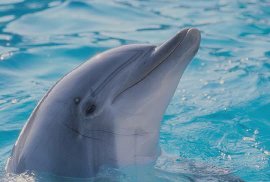


It is of interest to note that while some dolphins are reported to have learned English (up to fifty words used in correct context) [even higher since Sagan died] no human being has been reported to have learned dolphinese.
~ Carl Sagan (1934-11-09 1996-12-20 age:62)
Believe in porpoises, then.
~ John Lennon (1940-10-09 1980-12-08 age:40)
In the world of mammals there are two mountain peaks, one is Mount Homo Sapiens and the other is mount Cetacea.Sperm whales have brains six times more massive than humans. Dolphins’ brains are slightly larger than humans’. Cows’ brains are larger than humans’. Hummingbirds’ brain size to weight ratio is the highest of any animal. Dinosaurs managed their huge bodies with pea sized brains. Humans have brains three times more massive that chimpanzees even though we share 98% of the same genes.
~ Professor Teizo Ogawa
Can you make any sense of this? Is there any pattern? The key is the brain has many parts. There are lobes for sight, hearing, smell, touch, motor control and thinking -- the frontal lobes.
What you really want to look at is the absolute mass of the frontal lobes. This correlates well with our estimates of how smart the dumb animals (pigs, cows, deer, seals, dogs, chimpanzees, grasshoppers…) are. Unfortunately for man’s vanity, whales and dolphins have much larger frontal lobes than we do. That suggests the cetaceans (the generic term for dolphins and whales) are smarter than we are, even if the Bible insists man is the ultimately important animal on the planet.
Whales have had their large brains for 12 million years. Humans are the new kids on the block and have many quirks to iron out in coordination between the different parts of their triune brain.
A major difficulty in comparing the intelligence of man with that of dolphins is the fact that we have evolved into two such different environments. The so-called environment factor, which makes comparisons between even different ethnic groups of men extremely difficult, becomes almost an impenetrable barrier when comparing men and dolphins.
~ Horace Dobbs in Follow A Wild Dolphin.
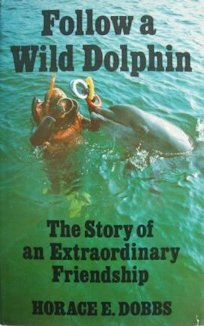 |
recommend book⇒Follow a Wild Dolphin: The story of an extraordinary friendship | |||||||||||||||||||||||||||||||||||||||||||||||||||||||
| by | Horace E Dobbs | 978-0-285-62255-5 | paperback | |||||||||||||||||||||||||||||||||||||||||||||||||||||
|---|---|---|---|---|---|---|---|---|---|---|---|---|---|---|---|---|---|---|---|---|---|---|---|---|---|---|---|---|---|---|---|---|---|---|---|---|---|---|---|---|---|---|---|---|---|---|---|---|---|---|---|---|---|---|---|---|
| publisher | Souvenir | 978-0-285-62255-5 | hardcover | |||||||||||||||||||||||||||||||||||||||||||||||||||||
| published | 1977-11-03 | |||||||||||||||||||||||||||||||||||||||||||||||||||||||
| a story of what it is like to have a wild dolphin as a friend. | ||||||||||||||||||||||||||||||||||||||||||||||||||||||||
| ||||||||||||||||||||||||||||||||||||||||||||||||||||||||
| Greyed out stores probably do not have the item in stock. Try looking for it with a bookfinder. | ||||||||||||||||||||||||||||||||||||||||||||||||||||||||
We know that every male humpback whale each year composes and performs a complex, thirty minute song, a theme and variation on the species and pod song of the previous year. How many humans do you know who could do that or who would even care to do that? Different sorts of intelligences value different sorts of activities.
We know that some cetaceans have individual names. They precede messages with the name of the other cetacean to whom they are addressed.
Cetacea are very social animals. They get along with each other in general better than men do. Cetaceans co-operate. They protect each other. To do that consistently takes intelligence. You won’t see it in any of the lower animals, not even man. Whales are not perfect gentlemen. Orcas attack and eat larger whales, ripping out the tongues of the blue whales and humpbacks have battles to decide the dominant male for mating. However, cetacea, not even orcas, will almost never attack man. Dolphins will even help drowning humans.
I once asked Dr. John Cunningham Lilly what he thought dolphins did with their large fore-brains. Something else he replied. I asked if there was any way I could get an inkling of what that something else was. He said Yes, swim with them. I did. It was something else. Until you have had that experience you are like a child pontificating on sex.
Man is a vain animal. He claims to have a penis bigger than a whale’s because his is bigger is relation to his overall weight. He puffs himself up in a similar way claiming to have a bigger brain. Even a housefly can control its body with six legs and two wings with astounding dexterity with a brain the size of a pinhead. Housefly musculature is comparably complex to ours. Dinosaurs did a similar feat. That you need a big brain to control a big body is a crock. Big brains are for thinking and processing sensory data. Much of man’s motor cortex is used for doing balance calculations, a requirement of bipedal locomotion. This means man does not have a thinking brain quite as big as it first appears. For more on the absolute/relative brain size debate, see the links section further on.
When you judge whale intelligence by human standards you are doing the same thing.
I worked on the project at Marineworld back in 1979 doing computer programming. I built a home brew interface between the two computers and wrote the device drivers. This was in the days before out-the-box LANs (Local Area Networks). I also wrote a sonically controlled delphinic Etch-A-Sketch.
In 1979-11 the big day arrived when we made the first ultrasonic sound. Research director John Kert selected a slow swooping de-dah-dee sound for the first test. He hoped the dolphins would simply echo it back. They did. However there was a computer foul up and we did not get it permanently recorded. He wanted to try again. But by this time the dolphins had taken control of the experiment. They speeded the de-dah-dee up, faster and faster. They played it backwards, then inverted it, then they just started jacking around improvising sounds on that theme. Kert was furious. From his point of view, the experiment was a total failure. He had no data of accurate echoing.
On my last day there I had a chance to show off my Etch-A-Sketch to the dolphins. They went bananas. They zoomed the cursor all over the screen but did not paint any recognisable images. They made scores of new sounds I had never heard dolphins make before.They were experimenting and playing with the new toy.
They sensed my fear and kept away. (They typically would approach fearless swimmers immediately.) They gradually approached me, accidentally touching me as they swam by. I gradually relaxed. I decided I would try to swim to the bottom of the tank. I figured this would symbolise my attempt to join them in their world rather than asking them to join mine at the surface.
I did not have a weight belt. I had quite a bit of trouble getting down. I looked and saw the two dolphins mimicking me, frantically flapping trying to get to the bottom. They were not just copying me, they were caricaturing me.
Dolphins are hard, solid muscle. In
the movies they look sort of spongy.
At one point I got to ride one on the back of one of the dolphins, holding on to the dorsal fin. I don’t know if it was Joe or Rose who took me for the ride. They were swished back and forth it front of me so fast I could not keep track which was which. I thought it was Joe, but Rose was the more forward and bossy. I was very happy. This was an image I had seen as a boy. Joe would take me to the bottom of the tank. When I ran out of air, he seemed to notice and took me back to the surface.
Then at one point at the bottom of the tank I had a very strange feeling, as though my head were being opened, creaking open like a treasure chest and a delightful joy and clean light was filling my brain. I felt totally unconditionally loved in a way I have never experienced before or since.
I eventually got tired and the dolphins delivered me to the side of the tank. John Lilly asked me to write up my experience in a book. I wondered if I should tell about the weird opening experience. I decided to tell the truth even if Lilly might consider me a nutcase.
Later John let me read the log book. Page after page people reported similar experiences. This was the hint at the something else that John suggested dolphins do with their large brains. Words really can’t come anywhere near to describing it. It was definitely outside the normal realm of experience.
The closest analogy I could think of would be trying to understand what being stoned feels like without ever smoking marijuana.
A researcher came to the Human Dolphin Foundation to study delphinic intelligence. He had a simple experiment involving a pair of lights and two paddles. John told the researcher, That task is far too simple. You will need many more lights and paddles to make it challenging enough. The researcher persisted.
The dolphin figured out the task after a couple of trials. The researcher was a statistician and wanted sufficient data for statistical significance. After about 7 trials, the dolphin tossed the equipment out of the tank. Further, ever after, she refused to let the researcher into the pool to swim, something dolphins don’t usually do.
The dolphins were fascinated with it. They stood in front of the camera and wagged back and forth. Chimps are similarly fascinated by mirrors. Then they started testing the limits of the image, moving on and off camera all around the perimeter of the image. Pigs may be intelligent animals but they have nothing on dolphins for curiosity.
One night I hooked up a video camera and took the dolphins on a tour of man’s world, at least of my activities, my computer programming and the computer lab. Up to then, the dolphins could not see anything much other than their tiny pool. I could not see them, but I could hear their appreciative cheers. Dolphins love novelty. That is a hallmark of intelligence. Most animals, including man, usually avoid it.
When I was a boy, my Dad took me in his boat to Pender Harbour where the first orca, Moby Doll had been captured. I looked at her in the floating pen. The pen was just a floating net. She poked her nose over the edge and could easily have swum out, but for some reason she elected not to. She was completely calm.
These creatures were volunteering for a grand adventure to study humans, not knowing if they would ever return to the wild. Joe and Rose were eventually released. They have avoided humans ever since.
I asked the supporters for evidence that whales are stupid. They pointed out that whales sometimes get stranded. Humans too get themselves in predicaments. Stupidity is getting yourself in a predicament with a simple solution that you miss, like a dog tangling himself in his tether.
Groups of whales that are beached refuse to abandon another member. If one is freed they rejoin the whale that cannot free itself. You could look on this that in whale ethics attending a fellow in distress is more important than life itself. To me, that sort of ethic sounds beyond humanity. We can’t even understand it.
Further, stranding of whales has nothing to do with stupidity. Japanese whale researchers think that one reason of stranding are parasites that destroy the whales sense of balance so that he is unable to navigate correctly anymore and gets stranded when swimming near beaches. Members of his family group might try to help him and get stranded too, or they might have the same sickness. This theory explains the phenomenon of stranding whales sufficiently. To claim that whales are stupid because they get stranded has the same logic as claiming that humans are stupid because old people sometimes suffer from Alzheimer’s disease.
The other piece of evidence that whale-haters use to prove whales are stupid is that they frequently have collisions with motor vessels, often being badly injured by propellers. Why would they not have the sense to get out the way? The best explanation I have so far is that they are caught sleeping. Possibly the noise is so loud, louder than any noise that would occur in nature, it simply overwhelms their sensitive hearing and they can’t determine from which direction it is coming.
Most Christians erroneously lump whales as a sort of fish and hence man has God-ordained dominion over them. If man has dominion, then surely whales could not be as bright as man.
When a Christian encounters evidence of cetacean intelligence, he experiences painful cognitive dissonance. The easiest way out is to discount the evidence.
Christians had similar troubles over the issue of slavery. They believed the Bible taught them it was honourable to own slaves, that it was OK to beat them, that black people were a cursed inferior race, that blacks were incapable of reading or writing and that blacks had no souls. Those religious beliefs blinded people to the obvious truths. It took a civil war to pry such superstitions loose.
Man has infinite capacity to delude himself about his superiority. He can do it even without religion. Consider how the Serbs have convinced themselves that Albanians are less than human. This makes rape and torture a noble duty.
My point is that otherwise sane people can stare at evidence of cetacean intelligence and always find some excuse to ignore it. They are not even prepared to entertain the principle of reasonable doubt. Makah supporters dismiss all my personal observations in this essay as anecdotal as if they were flying saucer reports impossible to check out for themselves.
A Makah supporter starts with the assumption that cetacea are giant water pigs — meat that will go to waste if not harvested. He demands absolute proof that cetacea are more intelligent than man and brighter in the same way that man is intelligent, before he will budge off his position.
A whale hugger starts with the assumption that cetacea are sacred, imbued with magical or mystical powers. He demands absolute proof that cetacea are blithering idiots before he will get off his position.
A scientist starts with the assumption he does not know whether cetacea are intelligent. As the data comes in, he forms a provisional opinion, always subject to revision. He trusts his own observations more than reports from others.
Norwegian marine microbial ecologist anders Jelmert, who often posts in alt.whales (see alt.animals.whales for the continuing debate) encouraging the Makah hunt, argues we should assume that cetacea are stupid until peer review journals post a consensus they are intelligent. He admits he has no personal experience with cetacea. This view is based on the traditional Makah assumption and a textbook he read. He dismisses everything I say here as anecdotal and hence utterly irrelevant and untrustworthy. Personal observations are not valid grounds for belief in his eyes, only controlled experiments reported in peer review journals are.
Like so many others, he flatly refuses to look for himself. He is like the good bishops who refused to peer through Galileo Galilei’s telescope fearing they would see something that would make them heretics.
At the very least you might view the IMAX (Image Maximum) movie on Dolphins which demonstrates for your own eyes on the giant screen some of the things I have told you here.
From my personal experience, it looks to me as if dolphins are intelligent. It seems to reason that the cetaceans with larger brains such as orcas and gray and humpback whales should be even more intelligent still. The scientists are still squabbling about this. No wonder; they can’t even agree on how to measure human intelligence. I will continue to trust my own eyes more that I trust those of someone else with an unknown agenda.
Indeed, certain animals have wonderfully enriched anterior cingulate areas compared to human. In whales and dolphins this area is much larger than in our brains. If we just look at their remarkable levels of social spontaneity, cooperation and group coordination, dolphins appear to have more sophisticated social emotional abilities than we do.
Belugas sometimes mimic human speech, much like parrots. It is very difficult for them to do given their equipment. It is not yet known if they are just mimicking sound or attempting to communicate.
If there is reasonable doubt about cetacean intelligence, I would think it prudent to err on the side of avoiding murder. There is little gain in killing a whale. Anyone who has spent even a day swimming with the dolphins would never dream of killing or eating them. Surely then, their bigger-brained brothers deserve the same treatment.
The plight of the dolphins and whales reminds me of the plight of the legless soldier in Dalton Trumbo’s Johnny Got His Gun. Bureaucratic minds close their minds because they can’t bear the shame of the evil they have already done. They pretend not to notice the evidence of the unbearable suffering they have caused and so perpetuate the misery. Japan alone kills 20,000 dolphins a year. Over half the world’s cetaceans have been exterminated.
Extinction is planetary genocide.
Why are the Icelanders, Norwegians and Japanese so intent on killing whales? It is a long tradition and it earns money. A hundred years ago, nobody had any way of knowing whales were intelligent. They could not even hear them, much less communicate with them using computers. We know better now, but these people refuse to change. They prefer to keep on murdering than admit they have been committing horrible crimes for millennia.
In 1971, Dalton Trumbo made a movie called Johnny Got His Gun. In it, scientists experiment which what they presume is a human vegetable, a casualty of war. A nurse discovers he is conscious. The scientists send her away and continue treating him as if he were a vegetable. This exactly what the Icelanders, Norwegians and Japanese are doing with whales — massive denial.
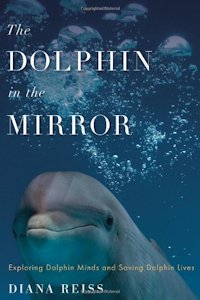 |
recommend book⇒The Dolphin in the Mirror: Exploring Dolphin Minds and Saving Dolphin Lives | |||||||||||||||||||||||||||||||||||||||||||||||||||||||
| by | Diana Reiss | 978-0-547-84461-9 | paperback | |||||||||||||||||||||||||||||||||||||||||||||||||||||
|---|---|---|---|---|---|---|---|---|---|---|---|---|---|---|---|---|---|---|---|---|---|---|---|---|---|---|---|---|---|---|---|---|---|---|---|---|---|---|---|---|---|---|---|---|---|---|---|---|---|---|---|---|---|---|---|---|
| birth | 1949 age:68 | 978-0-547-44572-4 | hardcover | |||||||||||||||||||||||||||||||||||||||||||||||||||||
| publisher | Houghton Mifflin Harcourt | 978-0-547-60778-8 | eBook | |||||||||||||||||||||||||||||||||||||||||||||||||||||
| published | 2011-09-20 | B005JSJUDQ | kindle | |||||||||||||||||||||||||||||||||||||||||||||||||||||
| She has done some experiments to explore dolphin intelligence, similar to the ones Lilly did. | ||||||||||||||||||||||||||||||||||||||||||||||||||||||||
| ||||||||||||||||||||||||||||||||||||||||||||||||||||||||
| Greyed out stores probably do not have the item in stock. Try looking for it with a bookfinder. | ||||||||||||||||||||||||||||||||||||||||||||||||||||||||
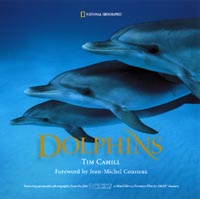 |
recommend book⇒Dolphins | |||
| by | Tim Cahill | 978-0-7922-3372-5 | paperback | |
|---|---|---|---|---|
| birth | 1944 age:73 | 978-0-7922-7594-7 | hardcover | |
| publisher | National Geographic | |||
| published | 2000-03-01 | |||
| A coffee table book with 125 photographs of dolphins based on the IMAX movie Dolphins. Published by National Geographic Books. | ||||
| Greyed out stores probably do not have the item in stock. Try looking for it with a bookfinder. | ||||
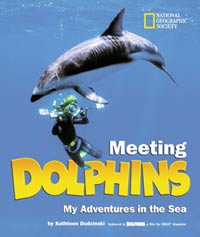 |
recommend book⇒Dolphins | |||
| by | Dr. Kathleen Dudzinski | 978-0-7922-3372-5 | paperback | |
|---|---|---|---|---|
| publisher | National Geographic | 978-0-7922-7129-1 | hardcover | |
| published | 2000-04-01 | |||
| A book suitable for children eight years and up. Published by National Geographic Books. | ||||
| Greyed out stores probably do not have the item in stock. Try looking for it with a bookfinder. | ||||
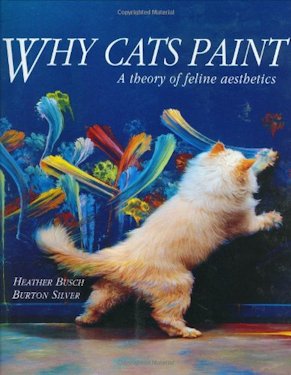 |
recommend book⇒Why Cats Paint: A Theory of Feline Aesthetics | |||||||||||||||||||||||||||||||||||||||||||||||||||||||
| by | Heather Busch, Burton Silver | 978-0-89815-612-6 | paperback | |||||||||||||||||||||||||||||||||||||||||||||||||||||
|---|---|---|---|---|---|---|---|---|---|---|---|---|---|---|---|---|---|---|---|---|---|---|---|---|---|---|---|---|---|---|---|---|---|---|---|---|---|---|---|---|---|---|---|---|---|---|---|---|---|---|---|---|---|---|---|---|
| birth | 1953 age:64 | 978-0-89815-820-5 | hardcover | |||||||||||||||||||||||||||||||||||||||||||||||||||||
| publisher | Ten Speed Press | |||||||||||||||||||||||||||||||||||||||||||||||||||||||
| published | 1994-05-01 | |||||||||||||||||||||||||||||||||||||||||||||||||||||||
| This sounds like a joke, but if you watch videos of cats painting, their activities seem very intent and creative. The smaller the animal is, the more likely we are to underestimate its intelligence. We just discovering the remarkable abilities of crows. One reason we underestimate them is they may use their intelligence to solve problems we do not find interesting. | ||||||||||||||||||||||||||||||||||||||||||||||||||||||||
| ||||||||||||||||||||||||||||||||||||||||||||||||||||||||
| Greyed out stores probably do not have the item in stock. Try looking for it with a bookfinder. | ||||||||||||||||||||||||||||||||||||||||||||||||||||||||

|
|
|
|
|
|
|
|
You can have quite a bit of fun choosing frames and mattes and seeing what they would look like. You can even what the picture would look like on your wall.
 Rings
Rings |
This page is posted |
http://mindprod.com/animalrights/intel.html |
Optional Replicator mirror
|
J:\mindprod\animalrights\intel.html | |
 |
Please read the feedback from other visitors,
or send your own feedback about the site. Contact Roedy. Please feel free to link to this page without explicit permission. | |
| Canadian
Mind
Products
IP:[65.110.21.43] Your face IP:[216.73.216.186] |
| |
| Feedback |
You are visitor number | |


